The Equity Map: 10 American Cities Proving That Arts Education Belongs to Every Child—Regardless of ZIP Code
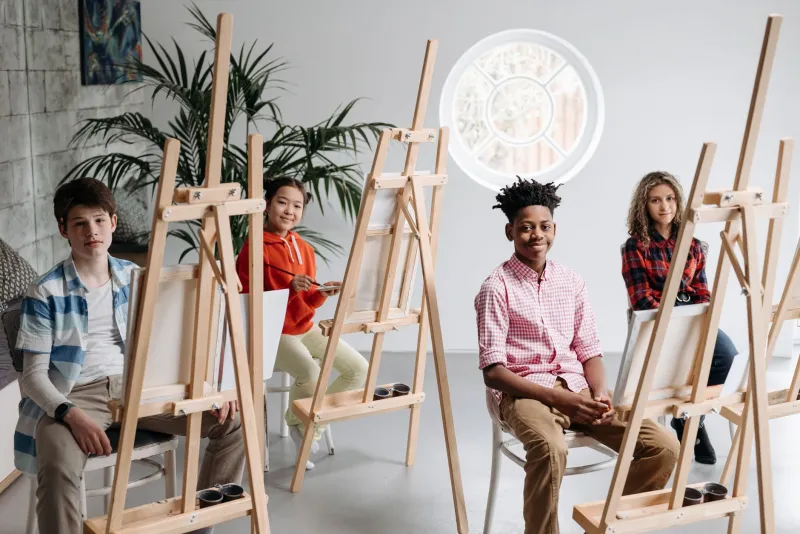
In 2023, the National Endowment for the Arts released findings confirming a troubling but unsurprising reality: children from low-income households are significantly less likely to participate in arts education than their more affluent peers, and this disparity widens as students advance through school. The consequences extend well beyond the arts themselves—research consistently links arts participation to improved literacy, reduced dropout rates, and stronger community connectedness.
Yet across the United States, a number of cities have moved from acknowledging this gap to actively closing it. Through innovative funding structures, bold municipal policy, and deep community partnerships, these ten cities are demonstrating that arts equity is not an aspiration—it is an achievable civic commitment.
1. Chicago, Illinois — Systemic Integration Through Policy
Chicago's Chicago Arts Education Initiative, launched under the umbrella of Chicago Public Schools, mandated that every K–8 student receive a minimum of 120 minutes of arts instruction per week—a requirement backed by dedicated city funding rather than discretionary grants. The initiative established the Arts Education Partnership, connecting 650 schools with more than 200 community arts organizations.
Measurable outcome: A longitudinal study by the University of Chicago found that students with consistent arts access through the program showed a 13 percent higher graduation rate compared to peers without such access.
Spotlight organization: Ingenuity Inc. coordinates the city's arts education data and partnership infrastructure, ensuring accountability and equitable distribution across all 77 community areas.
Actionable insight: Mandating arts instruction through school board policy—rather than relying on optional programming—creates structural durability that survives budget cycles and political transitions.
2. Seattle, Washington — Public Funding Meets Community Trust
Seattle's Creative Advantage program represents one of the most deliberate equity frameworks in American arts education. Rather than distributing resources uniformly, the program prioritizes schools in historically underinvested neighborhoods, directing the majority of its funding toward communities of color and low-income areas.
Measurable outcome: Since 2013, Creative Advantage has expanded arts access to more than 40,000 students annually, with measurable increases in student attendance and teacher retention in participating schools.
Spotlight organization: The Seattle Office of Arts & Culture serves as the administrative backbone, managing relationships between the school district, the city, and more than 100 community arts partners.
Actionable insight: Building an explicit equity lens into program design—not as an afterthought but as a foundational principle—prevents resources from defaulting to already-resourced schools.
3. Philadelphia, Pennsylvania — Anchor Institution Partnerships
Philadelphia has leveraged its extraordinary density of cultural institutions—the Philadelphia Museum of Art, the Curtis Institute, the Philadelphia Orchestra—to build a robust pipeline of free programming for public school students. The Philadelphia Cultural Fund provides direct grants to community arts organizations serving low-income youth, while the One Step Away initiative connects unhoused youth specifically with arts mentorship.
Measurable outcome: More than 85,000 students annually participate in free museum and performance programming through formalized school partnerships.
Spotlight organization: Art-Reach has pioneered an accessibility model that removes financial, physical, and social barriers to arts participation for marginalized populations, including youth in the foster care system.
Actionable insight: Cities with established cultural institutions can maximize existing infrastructure by formalizing school partnership agreements and requiring community access provisions as conditions of public funding.
4. New Orleans, Louisiana — Cultural Identity as Educational Strategy
New Orleans occupies a singular position in American cultural life, and its arts education model reflects that distinctiveness. The city has integrated its jazz, brass band, and Mardi Gras Indian traditions directly into school curricula through the New Orleans Center for Creative Arts (NOCCA) and the Roots of Music program, which provides free after-school music instruction to middle schoolers in underserved neighborhoods.
Measurable outcome: Roots of Music reports that 95 percent of its students graduate high school, compared to a citywide rate that has historically hovered around 75 percent.
Spotlight organization: Roots of Music provides instruments, tutoring, hot meals, and transportation—recognizing that arts access cannot be separated from a student's broader material needs.
Actionable insight: Grounding arts programming in a community's living cultural heritage dramatically increases student engagement and family investment.
5. Minneapolis, Minnesota — Immigrant and Refugee Community Centering
Minneapolis has developed one of the most intentionally multicultural arts education ecosystems in the country, with significant investment in programming that serves its large Somali, Hmong, and Latinx communities. The Springboard for the Arts organization and the Metropolitan Regional Arts Council jointly fund programs that center non-Western art forms alongside traditional arts education.
Measurable outcome: Participating schools report increased family engagement and a measurable reduction in disciplinary incidents among students enrolled in culturally responsive arts programs.
Spotlight organization: In Progress provides free visual arts and media production training to youth of color in North Minneapolis, a neighborhood that has historically received fewer cultural resources.
Actionable insight: Funding structures that explicitly include non-Western art forms signal to immigrant and refugee families that their cultural knowledge is valued—not merely tolerated.
6. Houston, Texas — Scale Through Corporate Partnership
Houston's arts education landscape is shaped significantly by its robust corporate sector. The Houston Arts Alliance has developed a model in which energy companies, healthcare systems, and financial institutions fund sustained, multi-year arts programming in Title I schools—not as one-time donations but as structured, accountable community investments.
Measurable outcome: The Young Audiences of Houston program reaches more than 200,000 students annually, with 80 percent of those students qualifying for free or reduced-price lunch.
Spotlight organization: DiverseWorks focuses specifically on artists and communities whose work falls outside mainstream cultural institutions, ensuring that Houston's diversity is represented in its arts education offerings.
Actionable insight: Multi-year corporate commitments, rather than annual charitable gifts, allow organizations to hire full-time staff, develop curriculum, and build genuine relationships with schools.
7. Denver, Colorado — Ballot-Box Arts Funding
Denver's Scientific and Cultural Facilities District (SCFD) is funded through a small sales tax approved by voters across seven counties—a model that has generated more than $900 million for cultural organizations since 1989. A portion of this funding is specifically directed toward free or low-cost programming for underserved communities.
Measurable outcome: SCFD-funded organizations collectively serve more than 10 million people annually, with free admission days and subsidized school programs ensuring access regardless of income.
Spotlight organization: Youth on Record uses music production as a vehicle for academic credit recovery, serving students who have been pushed out of traditional school settings.
Actionable insight: Voter-approved dedicated funding streams insulate arts education from year-to-year budget volatility and create long-term institutional stability.
8. Detroit, Michigan — Resurgence Through Arts Infrastructure
Detroit's arts education revival is inseparable from its broader story of community-led resurgence. Organizations like the Detroit Institute of Arts have implemented the Inside|Out program, placing museum-quality reproductions in public spaces across the city, while the Detroit Symphony Orchestra offers extensive free programming in schools across Wayne County.
Measurable outcome: The DSO's Civic Youth Ensemble has a documented 100 percent college acceptance rate among its graduating seniors over the past decade.
Spotlight organization: Matrix Theatre Company uses theater arts to address trauma, conflict resolution, and civic engagement among Detroit youth, many of whom live in neighborhoods with high rates of poverty and violence.
Actionable insight: Arts organizations that position themselves as community institutions—rather than elite cultural venues—earn the trust and participation of families who might otherwise feel excluded.
9. San Antonio, Texas — Municipal Leadership and Dedicated Budgeting
San Antonio's city council has made arts education a formal municipal priority, allocating a percentage of hotel occupancy tax revenue specifically to arts programming for youth. The San Antonio Area Foundation supplements public funding with private philanthropy, creating a diversified revenue model that has proven resilient.
Measurable outcome: The SAY Sí organization, a beneficiary of this funding ecosystem, has served more than 5,000 youth since its founding, with participants demonstrating significantly higher academic persistence rates.
Spotlight organization: SAY Sí (San Antonio Youth Yes) provides year-round, free arts programming in visual arts, digital media, and performance to teenagers from low-income households, operating on a full-day, full-year model that provides stability and mentorship.
Actionable insight: Tying arts funding to existing revenue streams—such as tourism taxes—creates a logical public narrative that connects cultural investment to economic development.
10. Providence, Rhode Island — Higher Education as Community Partner
Providence benefits from the proximity of the Rhode Island School of Design (RISD) and Brown University, both of which have developed formal community partnership programs that direct student talent and institutional resources toward public school arts education. The Providence After School Alliance coordinates arts programming across the city's after-school ecosystem.
Measurable outcome: Schools participating in RISD's community partnership programs report higher rates of student-led creative projects and increased interest in post-secondary education among participating students.
Spotlight organization: AS220 is a Providence institution that has offered free and subsidized arts programming, studio space, and youth development services for decades, functioning as a true community anchor.
Actionable insight: Higher education institutions possess enormous untapped capacity for community arts education; formal partnership agreements with accountability measures are essential to translating that capacity into equitable impact.
What These Cities Share
Across these ten cities, several common threads emerge. First, the most successful programs treat arts education as infrastructure—not enrichment. Second, they build equity into program design from the outset rather than attempting to retrofit it. Third, they diversify their funding sources to reduce vulnerability. And finally, they measure outcomes rigorously and use that data to advocate for sustained investment.
For communities seeking to replicate these models, the path forward is neither simple nor inexpensive. But as these cities demonstrate, it is entirely possible—and the evidence for its value is overwhelming.
Every child, regardless of their family's income or their neighborhood's resources, deserves access to the transformative power of the arts. These cities have chosen to act on that belief. The question for the rest of the country is whether it will follow their lead.