Many Tongues, One Stage: The Multilingual Theater Movement Reshaping American Performance

The American theater has long prided itself on being a space of empathy and imagination—a place where audiences are invited to inhabit lives unlike their own. Yet for much of its institutional history, that invitation has been extended almost exclusively in English. The stories told, the languages spoken, the cultural frameworks assumed: all have reflected a narrow slice of the nation's actual composition.
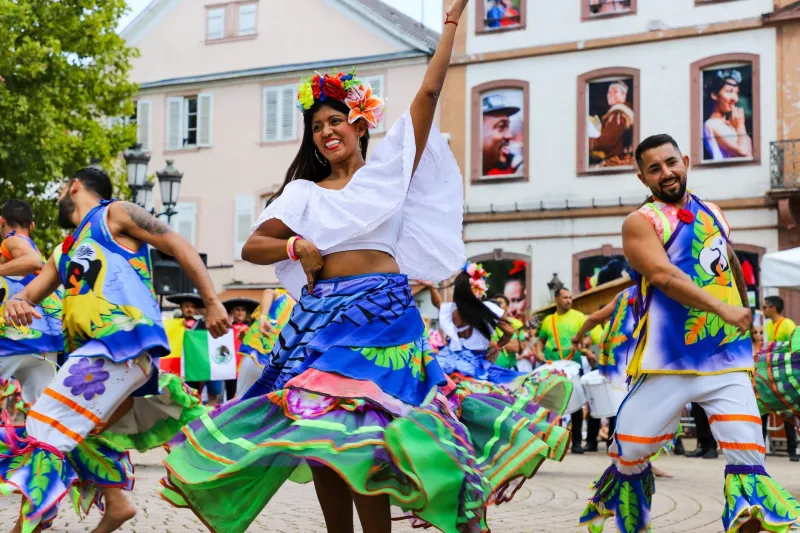
That is changing. Across the country, a growing network of multilingual theater companies is staging work that refuses this limitation. These ensembles perform in two, three, sometimes four languages simultaneously. They draw on theatrical traditions from West Africa, Latin America, Southeast Asia, and the Middle East. They build audiences not by translating immigrant experience into terms palatable to mainstream theatergoers, but by centering that experience on its own terms—and trusting that authenticity is its own form of accessibility.
The Language of Belonging
For many immigrant and first-generation American communities, the experience of watching a professional production in one's heritage language carries a weight that is difficult to articulate to those who have never been denied it.
"There is something that happens in your body when you hear your language on a professional stage," says Mariana Carreño King, artistic director of Teatro Luna in Chicago, one of the longest-running Latina theater companies in the United States. "It is not just recognition. It is permission. Permission to exist fully in a space that has historically told you to leave parts of yourself at the door."
This is the central argument of the multilingual theater movement: that language is not merely a vehicle for story. It is itself a story. The sounds, rhythms, and idioms of a language carry cultural memory that no translation—however skillful—can fully convey. When a Salvadoran grandmother hears a character speak in the particular Spanish of her home region, she is not simply understanding dialogue. She is being seen.
Companies at the Vanguard
In New York City, the Ma-Yi Theater Company has spent more than three decades developing and producing work by Asian American playwrights, frequently incorporating Filipino, Mandarin, and Korean language elements into productions that challenge the notion that Asian American experience can be reduced to a single narrative or idiom. Ma-Yi's writers' laboratory has become one of the most significant incubators for Asian American dramatic literature in the country.
In Los Angeles, Casa 0101 Theater in the Boyle Heights neighborhood operates as both a producing company and a community anchor, offering theater education to young people in a predominantly Latino community while staging bilingual productions that draw audiences from across Southern California. Founder Josefina López—best known for writing the play and film Real Women Have Curves—has spoken extensively about the company's dual mandate: to create professional-caliber work and to ensure that the community immediately surrounding the theater sees itself as the primary intended audience.
The Pillsbury House Theatre in Minneapolis has developed a distinctive model of what it calls "community-embedded" production, partnering with Somali, Hmong, and Latino organizations to develop theatrical work that emerges directly from those communities' experiences. Rather than hiring playwrights to interpret immigrant narratives from the outside, Pillsbury House facilitates processes in which community members themselves become the authors of their stories.
In Washington, D.C., Theater Alliance and its partner organizations have increasingly staged work that reflects the capital's extraordinary linguistic diversity—a city where more than one hundred languages are spoken in public school classrooms. Productions incorporating Amharic, Spanish, and French have drawn multigenerational Ethiopian American, Latino, and West African audiences who rarely attend mainstream theater institutions.
The Gatekeeping Problem
Despite their artistic vitality and demonstrated community impact, multilingual theater companies face structural disadvantages that their English-only counterparts do not.
Grant review panels at major foundations frequently lack reviewers with the linguistic competency to evaluate work in languages other than English. This creates a systemic bias in which artistic merit is assessed by people who cannot fully access the work being judged. Several company leaders interviewed for this article described the experience of submitting grant applications that required them to justify the use of languages other than English in their own productions—a requirement that would strike most mainstream theater companies as absurd if applied to them.
"We are asked, constantly, to explain why our community deserves to see itself," says one artistic director who requested anonymity to protect ongoing funding relationships. "No one asks the Roundabout Theatre Company to justify why it produces work in English."
Federal arts funding presents similar challenges. The National Endowment for the Arts, while increasingly attentive to equity in its grant-making, operates within congressional appropriations that have remained stagnant for decades in real terms. Multilingual companies, which often serve communities with lower average incomes and therefore generate less earned revenue through ticket sales, are disproportionately dependent on contributed income—making them more vulnerable to funding fluctuations.
Audience-Building as Political Act
The companies most successfully navigating these constraints share a common strategic orientation: they treat audience development not as a marketing function but as a form of community organizing.
When a multilingual theater company partners with a local immigrant services organization to offer free or deeply discounted tickets to recently arrived families, it is doing something more than filling seats. It is demonstrating that the theater is a space where those families have standing—where their presence is not merely tolerated but actively sought.
Digital tools have expanded the possibilities for this kind of outreach. Several companies now offer live-stream options with simultaneous interpretation, allowing audiences who cannot physically attend to participate in the theatrical event. Others have developed educational materials in multiple languages that accompany productions, connecting school programs to professional work in ways that reinforce the legitimacy of multilingual artistic expression for young people.
The Mainstream Takes Notice—Slowly
There are signs that the broader American theater establishment is beginning to reckon with what multilingual companies have demonstrated. Lin-Manuel Miranda's In the Heights—which incorporated Spanish dialogue and Afro-Caribbean musical traditions into a Broadway production—introduced millions of theatergoers to the possibility that American musical theater could sound like the actual America it claims to represent.
But individual breakthrough productions are not the same as structural change. The institutional theater—its major regional houses, its Broadway ecosystem, its graduate training programs—remains overwhelmingly oriented toward English-language work and the cultural assumptions embedded within it.
The multilingual theater movement is not waiting for that establishment to evolve on its own timeline. It is building parallel infrastructure: training programs, production networks, critical frameworks, and audiences that do not require mainstream validation to thrive.
A More Accurate Mirror
At its core, the argument these companies are making is simple: American theater should reflect American life. And American life is conducted in hundreds of languages, within dozens of overlapping cultural traditions, by communities whose stories have accumulated over generations and deserve the full dignity of professional artistic expression.
The stage, at its best, is a mirror. For too long, that mirror has been angled to reflect only a portion of the population it purports to serve. The companies at the forefront of multilingual performance are not simply diversifying theater. They are correcting its aim—and in doing so, revealing just how much has always been in the room, waiting to be seen.