Paint, Perform, Participate: How Creative Programs Are Drawing Marginalized Americans Into Civic Life
When the Ballot Box Feels Like Someone Else's Door
For millions of Americans—particularly young people, communities of color, and those living in economically distressed neighborhoods—formal political participation has long felt like a system designed without them in mind. Voter turnout data consistently reveals that the communities most affected by policy decisions are frequently the least represented at the polls and in public comment meetings. Traditional civic engagement strategies, from canvassing to town halls, have struggled to close this gap. Yet in cities and towns across the country, a quieter and more inventive approach is gaining momentum: using the arts as the first point of contact between disengaged residents and the civic structures that govern their lives.
This is not a peripheral experiment. It is, by many measures, a disciplined and expanding field—one that blends community organizing principles with the participatory power of muralism, theater, poetry, and public installation. The results, while difficult to quantify in the language of traditional political science, are reshaping neighborhoods and producing advocates where apathy once prevailed.
The Mural as a Political Statement and an Invitation
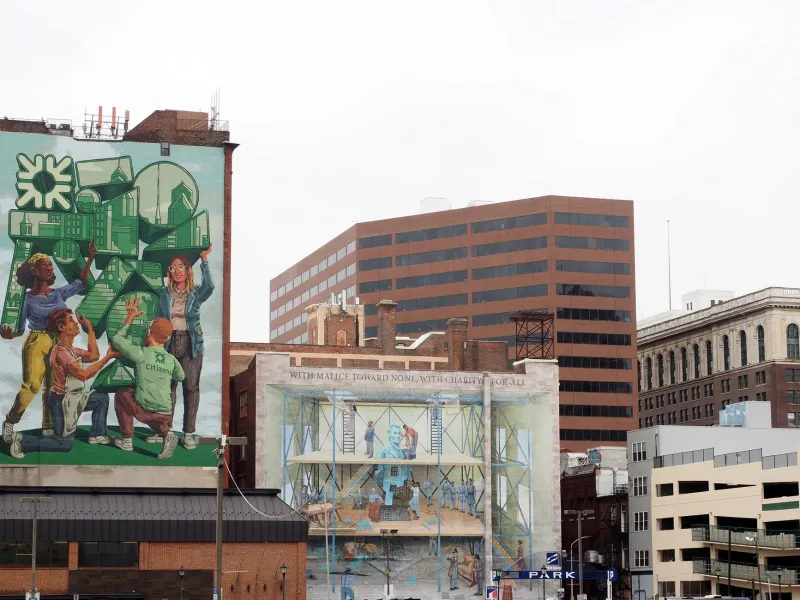
In Philadelphia's Kensington neighborhood, long defined in national media by its opioid crisis and economic abandonment, the Village of Arts and Humanities has spent decades operating on a foundational premise: that beautifying a block is also an act of claiming it. The organization's community mural projects do not merely add color to deteriorating facades. They open sustained conversations about land use, housing rights, and municipal neglect—conversations that frequently migrate from the sidewalk to City Hall.
Participants in mural-making workshops often report that the collaborative process itself is transformative. Deciding together what an image should represent, whose history it should honor, and what future it should envision requires exactly the kind of deliberative negotiation that underpins democratic participation. For residents who have never attended a city council meeting, the experience of co-authoring a public image can function as an accessible rehearsal for civic voice.
Similar dynamics are at work in Los Angeles, where the Social and Public Art Resource Center (SPARC) has long embedded civic dialogue into its mural production model. SPARC's Great Walls Unlimited program has brought together youth from communities historically underrepresented in local governance, guiding them through processes that require research into neighborhood history, engagement with local stakeholders, and navigation of city permitting systems—a bureaucratic education that is, by design, indistinguishable from civic training.
Theater as a Laboratory for Political Imagination
If muralism opens the door to civic engagement through collective image-making, participatory theater invites communities to rehearse the future they want to inhabit. Drawing on the tradition of Augusto Boal's Theater of the Oppressed, a number of American organizations have adapted forum theater techniques to address hyper-local policy concerns, from school discipline practices to zoning decisions.
In Chicago, the Albany Park Theater Project has spent years developing original performances with and about immigrant and working-class youth on the city's Northwest Side. The organization's productions are not simply artistic achievements; they are research documents, drawing on extensive interviews with community members about their lived experiences with systems of power. When those productions are staged in front of audiences that include aldermen, school administrators, and housing advocates, the theater becomes a form of testimony that carries the moral weight of lived experience alongside the narrative clarity of art.
The Cornerstone Theater Company, which operates nationally but maintains deep roots in community-specific projects, takes a similar approach, embedding artists within specific communities for extended residencies before any performance is created. The process of making the work—the listening, the negotiation, the creative decision-making—is understood by the organization to be as important as the final production. Participants frequently emerge from these residencies with a clearer sense of their own political agency and a broader network of community relationships that sustain ongoing advocacy.
Young People as Primary Beneficiaries and Leaders
The demographic most consistently cited by practitioners in this field as both the most disengaged from traditional civic structures and the most responsive to arts-based entry points is young people, particularly those between the ages of sixteen and twenty-four. Research from the National Conference on Citizenship and other civic health monitoring bodies has documented persistently low rates of political participation among this cohort, even as surveys reveal high levels of concern about issues ranging from climate policy to gun violence.
Organizations such as Young Audiences Arts for Learning, which operates affiliate networks across more than forty states, have documented measurable increases in civic knowledge and self-reported political efficacy among youth participants in arts-integrated programming. The mechanism, practitioners argue, is relational rather than informational. Young people do not become more civically engaged simply because they learn more facts about government; they become engaged when they experience themselves as capable of shaping their environment—and arts-based programs, by their nature, create conditions for exactly that experience.
Urban Word NYC, a literary arts organization serving New York City youth, has built an explicit civic pipeline into its programming model. Young poets who develop their craft through Urban Word's workshops are systematically connected to opportunities for public testimony, policy advocacy, and community organizing. The spoken word stage, in this model, is not a destination but a launchpad.
From Expression to Policy: Measuring What Matters
Skeptics of arts-based civic engagement sometimes question whether creative participation translates into durable political outcomes. It is a reasonable challenge, and the field has not always been equipped to answer it rigorously. However, a growing body of evaluation work is beginning to document concrete connections between arts programming and policy-level change.
The Animating Democracy initiative, a project of Americans for the Arts, has compiled case studies demonstrating that arts-based civic processes have contributed to measurable outcomes including the adoption of new municipal policies, changes in institutional practices, and the emergence of community-led advocacy coalitions that persist long after specific projects conclude. These outcomes are not inevitable, and they require intentional organizational design—arts programs that are serious about civic impact must build explicit bridges between creative participation and political action, rather than assuming that inspiration alone will produce structural change.
A Compass Pointing Toward Collective Power
What unites the most effective organizations working in this space is a refusal to treat art and civic life as separate domains. They understand, as their communities often intuitively do, that culture is not a supplement to political power but one of its primary sources. When a neighborhood collectively decides what image should mark its walls, or when young people transform their most urgent fears and hopes into public performance, something politically significant is occurring—something that no registration drive or civics curriculum alone can replicate.
The quiet revolution underway in community arts spaces across the United States is not quiet because it lacks ambition. It is quiet because its most important work happens in the sustained, unglamorous labor of building relationships, developing voice, and cultivating the belief that participation is both possible and consequential. For communities long told that power belongs to someone else, that belief is itself a radical act.