Unlocking the Orchestra: How Community Ensembles Are Rewriting Classical Music's Unspoken Rules
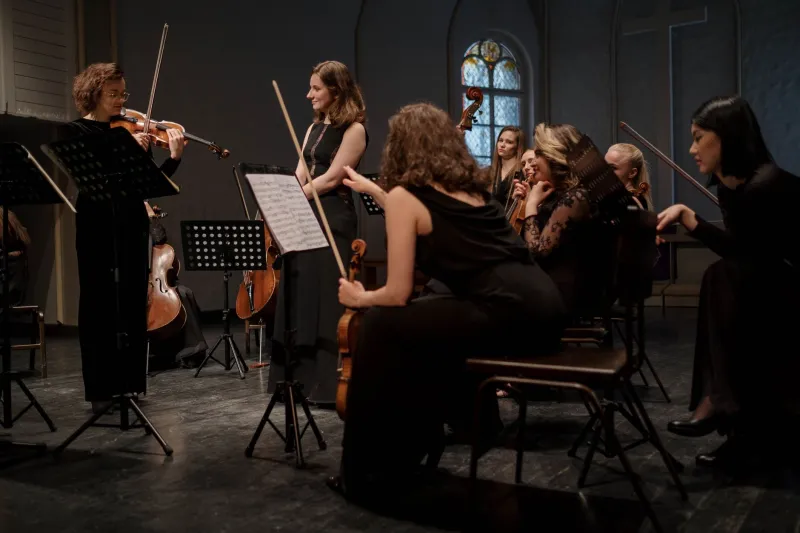
For generations, the image of the American symphony orchestra has remained stubbornly fixed: a sea of formal black attire, a predominantly white stage, and a repertoire that implicitly signals who belongs and who does not. Yet in cities from Oakland to Baltimore, a different picture is emerging—one where community orchestras are actively dismantling the structural barriers that have long determined who gets to play, who gets to lead, and whose musical heritage is considered worthy of a concert hall.
This is not merely a story of diversity initiatives or well-meaning programming. It is a story about institutional transformation, sustained investment, and the young musicians whose lives are being reshaped by organizations willing to do the difficult, unglamorous work of systemic change.
The Architecture of Exclusion
Understanding why community orchestras matter requires first understanding what they are working against. Classical music training in the United States has historically operated through a narrow pipeline: private lessons, youth conservatories, elite summer programs, and university music schools. Each of these stages carries a price tag that places professional-level training far beyond the reach of most working-class families—and disproportionately out of reach for Black, Latino, Indigenous, and Asian American communities who have faced compounding economic and social disadvantages.
According to a 2021 report from the League of American Orchestras, musicians of color comprise fewer than 15 percent of players in major professional ensembles nationwide. The pipeline problem is real, but it is not inevitable. It is the product of deliberate choices made over many decades—choices about where to invest, whose talent to cultivate, and which musical traditions to elevate.
Community orchestras operating in underserved neighborhoods are choosing differently.
From Audition Halls to Apartment Complexes: Recruitment Reimagined
In Chicago's South Side, the Southside Philharmonic Project has abandoned the traditional audition model entirely for its youth division. Instead of expecting families to navigate formal application processes, program directors partner with public school music teachers, community centers, and local churches to identify students who demonstrate interest and aptitude—regardless of prior training.
"We go to where the kids are," explains one program coordinator who has worked with the ensemble for six years. "We don't wait for them to find us, because historically, the system was designed so that certain kids never would."
This outreach philosophy extends to instrument access. The project maintains a lending library of over 200 instruments, ensuring that the cost of a violin or cello never becomes the reason a student walks away. For many participants, borrowing an instrument from the program marks the first time classical music has felt like something intended for them.
Similar models are taking root in Houston, where a community ensemble embedded within a predominantly Latino neighborhood offers bilingual programming and incorporates Latin American orchestral composers into its curriculum—a deliberate signal that the canon is wider than conservatory tradition often suggests.
Mentorship as Infrastructure
Free lessons and borrowed instruments, while essential, represent only one dimension of what effective inclusion programs provide. The most transformative initiatives pair young musicians with mentors who share their cultural backgrounds—a practice that addresses not just technical skill gaps but the psychological barriers that come with entering spaces historically coded as exclusive.
In Baltimore, a program called Strings Across the City has built a formal mentorship structure in which professional musicians of color from regional orchestras commit to working with youth participants over a minimum two-year period. The program's director, a violinist who grew up in the same neighborhood where the program operates, describes mentorship as "infrastructure, not supplemental programming."
"When a Black teenager walks into an orchestra rehearsal and sees someone who looks like them leading a section, something shifts," she notes. "It moves from abstract possibility to concrete reality. That shift is everything."
Participants in such programs report not only improved musical proficiency but increased confidence in academic settings more broadly—a finding that aligns with extensive research on arts education's role in holistic youth development.
Conducting Change From the Podium
Leadership representation matters as much as player diversity. Conductors shape organizational culture, select repertoire, and set the tone for who feels welcome in an ensemble. Community orchestras that have made the most measurable progress on inclusion tend to share one characteristic: conductors who treat equity as a core artistic value rather than an administrative checkbox.
In Detroit, a community ensemble led by a conductor of Nigerian descent has expanded its programming to include works by composers from the African diaspora alongside the standard European canon. Audience attendance has grown significantly, particularly among younger listeners who previously described classical music as irrelevant to their lives.
"Repertoire is a form of welcome," the conductor explained during a recent community forum. "When you program only Beethoven and Brahms, you are making an implicit statement about whose stories deserve to be told through orchestral sound."
Persistent Challenges and the Road Ahead
Progress, it must be said, is uneven. Many community orchestras operate on precarious budgets, dependent on grant cycles that shift with political winds and philanthropic priorities. Staff turnover disrupts mentorship continuity. And even well-intentioned programs can replicate hierarchies of prestige if they are not intentional about governance and community accountability.
Funding remains the most stubborn obstacle. While major symphony orchestras command multi-million-dollar endowments, community ensembles serving underrepresented populations often operate on shoestring budgets that limit their capacity to pay teaching artists fairly, maintain instrument inventories, or provide transportation assistance to students who lack reliable access.
Advocacy organizations working at the intersection of arts and education policy argue that public investment—through school music budgets, municipal arts funding, and state-level grants—must be dramatically expanded if community orchestras are to scale their impact. The work cannot rest on the shoulders of nonprofits alone.
A Different Kind of Compass
What these orchestras are building, collectively, is not simply a more diverse version of an existing institution. They are constructing a fundamentally different relationship between classical music and community—one grounded in reciprocity, cultural respect, and the conviction that artistic excellence is not the exclusive property of those who can afford private conservatory training.
For young musicians navigating this landscape, the message is becoming clearer: the orchestra hall was always meant to be yours, too. The institutions willing to act on that belief are proving, city by city and student by student, that the sound barrier can be broken—and that what lies beyond it is worth every difficult note.