Making at Their Own Pace: How Disability Justice Artists Are Dismantling the Cult of Creative Productivity
A Different Kind of Studio
When Renata Osei first walked into a community fiber arts circle designed specifically for people with chronic illness, she was not expecting to feel productive. She had spent years measuring her creative output against a standard she could never quite meet—gallery deadlines, workshop schedules, the relentless expectation that making art meant making it quickly, abundantly, and on someone else's timeline. What she found instead was a table where no one tracked how many rows of yarn she completed, where rest was built into the agenda, and where the act of showing up was itself considered a form of creative achievement.
"I had internalized so much shame about how slowly I work," Osei, who lives with lupus, explained in a recent interview. "That space gave me permission to make something beautiful without punishing myself for how long it took."
Her experience is far from singular. Across the United States, a growing network of disability justice artists, organizers, and educators is constructing creative communities that operate on fundamentally different terms than the mainstream arts world. These are not spaces that simply add a ramp to the entrance or offer a captioned performance once a season. They are communities built from the ground up around the principle that disabled and chronically ill people deserve to be at the center of cultural production—not as an afterthought, but as architects of a new creative ethic.
The Ableism Embedded in Arts Culture
The traditional arts world, for all its claims to progressive values, has long operated according to a set of deeply ableist assumptions. Productivity is equated with worth. Speed is mistaken for skill. Physical stamina is treated as a prerequisite for creative legitimacy. Artists are expected to stand for hours at gallery openings, travel extensively for residencies, sustain high-output studio practices, and perform wellness and vitality as a kind of professional credential.
For disabled artists—whether they live with physical limitations, cognitive differences, chronic pain, fatigue-related conditions, or mental health challenges—these standards have historically functioned as a form of exclusion dressed up as neutral expectation. The message, rarely stated but consistently enforced, is that art-making is a pursuit for those whose bodies and minds conform to a narrow template of capability.
Disability justice advocates have long challenged this framing. Rooted in the work of scholars and activists such as Mia Mingus and Sins Invalid, a San Francisco-based disability justice performance project, the disability justice framework insists that ableism is not incidental to systems of oppression—it is structural. It argues that any meaningful commitment to equity must grapple with how cultural institutions, including arts organizations, perpetuate hierarchies of bodily and cognitive worth.
"When we talk about who gets to be an artist, we are also talking about who gets to be seen as fully human," said one Chicago-based organizer who runs accessible printmaking workshops for adults with physical disabilities. "Those are not separate conversations."
Adaptive Practice as Political Act
What makes the current moment distinctive is the degree to which disabled artists are moving beyond critique and into construction. They are building the spaces they were denied, designing practices that honor the reality of their bodies, and inviting others to join them.
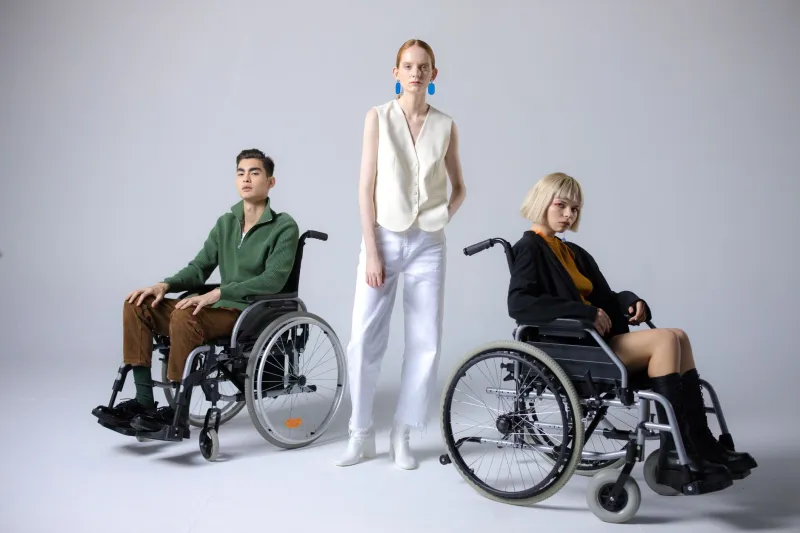
Seated dance and movement workshops have emerged as one of the most visible expressions of this shift. Programs in cities including New York, Minneapolis, and Oakland are offering choreography classes designed entirely for wheelchair users and others for whom standing-based movement is inaccessible. These are not modified versions of existing dance forms—they are original vocabularies of movement developed by and for disabled practitioners, drawing on the full expressive range of bodies that mainstream dance culture has consistently rendered invisible.
Textile arts have similarly become a significant site of accessible creative practice. Low-energy crafts such as slow-stitch embroidery, hand-weaving on lap looms, and finger-knitting are being taught in community health centers, disability resource organizations, and online collectives where participants set their own pace and define their own goals. The emphasis is not on completing a product but on sustaining a practice—on remaining in relationship with creative work even when the body demands rest.
Digital and multimedia art forms have opened additional pathways. Voice-activated design tools, eye-tracking software, and adaptive input devices have made visual art, music composition, and creative writing accessible to artists with severe motor limitations. Several nonprofit organizations are now working to ensure that these technologies reach low-income disabled artists who cannot afford them independently, recognizing that access to adaptive tools is itself an equity issue.
Rethinking the Metrics of Creative Value
Perhaps the most radical dimension of disability justice arts practice is its challenge to how creative value is measured. In a culture that prizes output—the number of paintings completed, the size of an artist's portfolio, the pace at which new work is produced—disability justice communities are insisting on a different accounting.
Rest is recognized as part of the creative process, not a failure of it. Partial completion is honored rather than stigmatized. The relational dimensions of making—the conversations, the shared silence, the mutual support—are understood as outcomes in their own right, not merely byproducts of the real work happening on the canvas or the loom.
This reframing has implications that extend well beyond disability communities. In an era of widespread burnout, anxiety, and creative exhaustion, the disability justice arts movement is offering a critique that resonates with many people who do not identify as disabled but who have nonetheless felt crushed by the demand to produce without ceasing.
"We are modeling something that a lot of people need," said one California-based artist and educator who has spent the past decade building accessible ceramics programs. "When you remove the pressure to be productive in a conventional sense, something opens up. People make things they never would have made under pressure. They take risks. They slow down enough to actually see what they are doing."
The Institutional Gap—and the Path Forward
Despite the vitality of these grassroots efforts, significant institutional barriers remain. Many disability justice arts organizations operate on precarious funding, dependent on small grants and individual donations that are rarely sufficient to sustain the level of programming these communities deserve. Mainstream arts funders have been slow to recognize disability justice work as a priority, and when they do, they often impose reporting requirements and productivity metrics that contradict the very values these organizations embody.
Advocates are calling for a fundamental shift in how arts education policy addresses disability—not simply as a matter of physical accessibility compliance, but as a question of whose creative knowledge is considered worth funding, teaching, and preserving. They argue that arts education curricula at every level, from elementary school through professional training, should incorporate disability justice frameworks, ensuring that the next generation of artists enters the field with a more expansive understanding of what creative practice can look like.
For Renata Osei, the stakes are straightforward. "The question is not whether disabled people can make art," she said. "We have always made art. The question is whether the institutions that claim to support creativity are willing to actually change—or whether they will keep celebrating inclusion while demanding that we perform ability we do not have."
The communities being built by disability justice artists are not waiting for that answer. They are already making something new.