Words That Carry Worlds: The Arts-Driven Movement to Resurrect Native Languages Before They Vanish
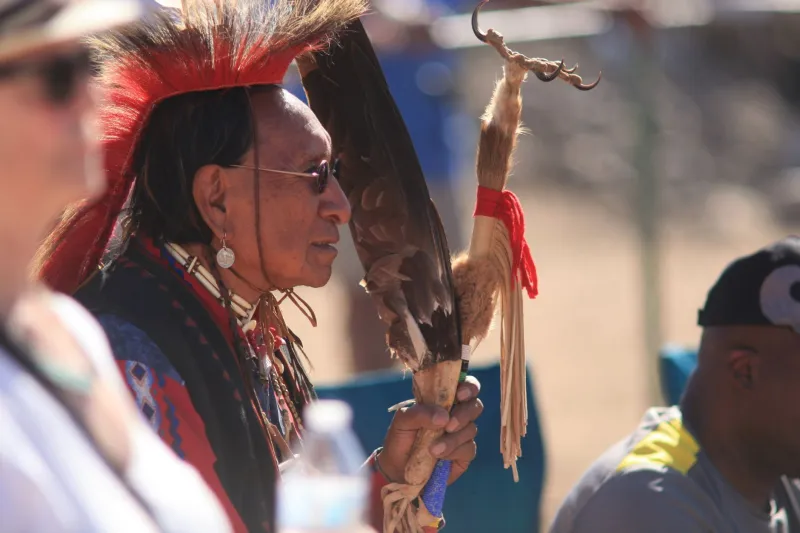
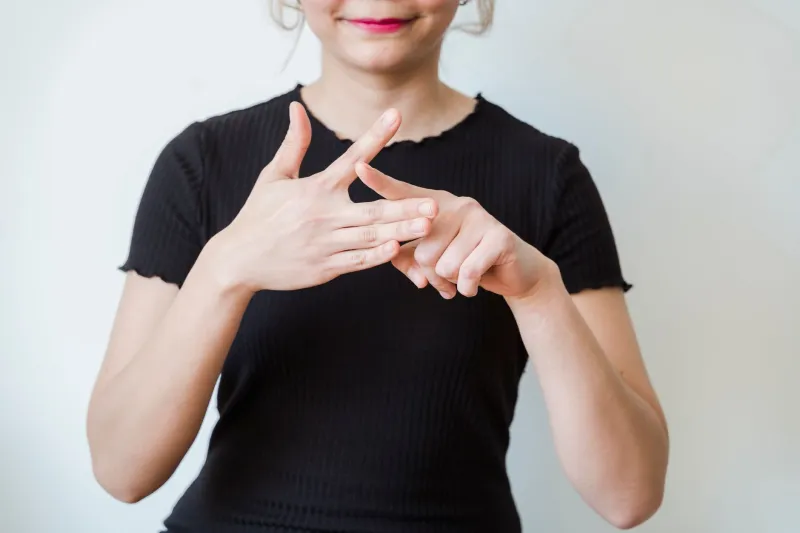
In a converted community hall on the Blackfeet Nation reservation in northwestern Montana, a circle of teenagers sits watching an elder demonstrate hand positions used in traditional storytelling. The elder speaks only in Blackfoot—Niitsitapi—and the young people lean forward, not in reluctant compliance, but in genuine fascination. What draws them is not a grammar worksheet. It is a story: one that has been passed through generations, one that belongs to them, and one that they are only now learning to claim as their own.
This scene is neither isolated nor accidental. It is the deliberate product of a growing movement that places artistic practice at the center of Indigenous language revitalization—a movement that is redefining how communities transmit culture across the generational divide.
The Crisis Behind the Creativity
The numbers are sobering. According to the Endangered Language Fund, of the approximately 150 Indigenous languages still spoken in the United States, the vast majority are considered critically endangered. Many are spoken fluently by only a handful of elders, most of whom are elderly. Linguists estimate that without intervention, the majority of these languages could fall silent within two to three decades.
Language loss is rarely an isolated phenomenon. It is the downstream consequence of centuries of deliberate suppression—federal boarding school policies, forced assimilation programs, and systematic erasure of cultural practice. Revitalization, therefore, is not merely a linguistic endeavor. It is an act of sovereignty.
Yet the tools traditionally deployed in that effort—classroom instruction, textbooks, structured curricula—have yielded mixed results, particularly among youth. Adolescents who might disengage from conjugation drills will often remain captivated for hours by a drum circle conducted in their ancestral tongue.
Where Art and Language Converge
The principle animating arts-based language programs is straightforward: immersion is most effective when it is emotionally resonant. When a young person learns a word by singing it, by painting the concept it describes, or by embodying it through dance, that word takes root in a far deeper cognitive and emotional register than rote memorization can reach.
Organizations such as the First Peoples Cultural Council, which supports Indigenous communities across North America, have documented this effect extensively. Their research consistently shows that youth participants in arts-integrated language programs demonstrate higher retention rates, greater enthusiasm for continued learning, and stronger reported connections to cultural identity than those enrolled in conventional language classes alone.
The Lakota Language Consortium, headquartered in South Dakota, has built an entire educational philosophy around this insight. Its summer immersion camps combine Lakota-language instruction with traditional music, beadwork, and oral storytelling, creating environments in which the language is not a subject to be studied but a medium through which life is lived—even briefly. Alumni of these programs consistently report that the arts components were the experiences that made the language feel alive.
Storytelling as Syntax
Perhaps no art form is more naturally suited to language transmission than storytelling. Oral narrative traditions exist within virtually every Indigenous culture in North America, and they carry within them not only vocabulary but grammar, metaphor, worldview, and cosmology. To learn a story in one's ancestral language is to receive a comprehensive education in that language's innermost logic.
Nonprofits such as the Doyon Foundation in Alaska have made storytelling central to their revitalization strategy. The foundation's Athabascan language programs pair youth apprentices with elder storytellers, creating mentorship relationships that transmit language and cultural knowledge simultaneously. The resulting performances—shared at community gatherings, cultural festivals, and increasingly through digital platforms—serve both as educational experiences and as public declarations of cultural continuity.
"When a young person stands before their community and tells a story in their language," one foundation program officer explained in a recent public presentation, "something shifts. The language stops being a relic and becomes a living instrument of identity."
Visual Art as Cultural Architecture
Visual arts programs offer a complementary pathway. In New Mexico, the Pueblo of Zuni has partnered with regional arts nonprofits to develop mural projects in which community members—particularly youth—create large-scale works depicting traditional stories, ceremonies, and landscapes. Every element of the creative process, from initial concept discussions to the selection of imagery, is conducted in Zuni, the community's ancestral language.
The murals themselves become permanent linguistic environments. Labels, captions, and interpretive texts are written exclusively in Zuni, transforming public spaces into language-rich contexts that reinforce learning beyond formal program hours. Visitors to the community encounter the language not as a curiosity but as the authoritative voice of the place.
This approach reflects a broader understanding among language revitalization advocates: the goal is not merely to teach a language but to restore it to its natural habitat—the daily rhythms of community life.
Economic and Social Dimensions
The benefits of cultural continuity extend well beyond the linguistic. Research conducted by scholars at the University of Victoria has established correlations between strong cultural identity—including language fluency—and measurable improvements in Indigenous community health outcomes, including reductions in youth suicide rates, substance abuse, and other indicators of social distress. Culture, in this framework, is not ornamental. It is infrastructural.
Arts-based revitalization programs also generate tangible economic activity. Traditional arts markets, performance events, and cultural tourism initiatives create income streams for Native artists and educators while simultaneously expanding the audiences for Indigenous cultural expression. The Indian Arts and Crafts Association reports sustained growth in the market for authentic Native American artwork, and communities with robust cultural programming are better positioned to attract both philanthropic investment and heritage tourism.
Federal support, while inconsistent, has begun to reflect this understanding. The Administration for Native Americans, which funds language preservation projects through its Native Language Preservation and Maintenance program, has increasingly prioritized applications that integrate arts-based methodologies—a recognition, however incremental, of their demonstrated effectiveness.
Sustaining the Momentum
Challenges remain formidable. Funding for Indigenous arts and language programs is perpetually precarious, dependent on grant cycles that rarely align with the long-term commitments that genuine revitalization requires. Elder speakers—the irreplaceable repositories of living language—continue to pass away faster than new fluent speakers can be cultivated. Digital documentation efforts, while valuable, cannot fully substitute for intergenerational human transmission.
And yet the movement persists, animated by a conviction that is both pragmatic and profound. The organizations doing this work understand that they are not preserving museum artifacts. They are sustaining living systems of meaning—ways of naming the world that, once lost, cannot be reconstructed from recordings or academic transcriptions.
Back in that Montana community hall, the storytelling session has concluded. The teenagers are now attempting to retell fragments of what they heard, in Blackfoot, to one another—haltingly, laughingly, with the unselfconscious energy of people discovering something they did not know they had been missing.
The words are imperfect. The grammar is tentative. But the language is speaking, and they are listening. For communities that have survived everything history has thrown at them, that is not a small thing. It is, in every sense that matters, everything.