Beyond the Stream: How Arts Organizations Are Reaching Communities That the Digital Age Left Behind
The pandemic accelerated a transformation that arts institutions had been contemplating for years. Overnight, orchestras began livestreaming concerts, theaters offered pay-what-you-can digital tickets, and dance companies built entire seasons around virtual audiences. For tens of millions of Americans with reliable high-speed internet, this represented an unprecedented democratization of cultural life. For the roughly 21 million rural residents who still lack access to broadband infrastructure—according to Federal Communications Commission estimates—it represented something else entirely: a widening of the very gap that digital evangelists had promised to close.
The irony is not lost on the organizations working in these communities. "We kept hearing that the internet was going to solve the access problem," says one program director at a community arts nonprofit serving Appalachian Kentucky. "But when you can't buffer a two-minute video without it freezing, a full-length opera isn't coming through your screen."
What has emerged in response is a genuinely inventive ecosystem of low-tech and hybrid strategies—approaches that acknowledge the material realities of underserved communities without abandoning the ambition to deliver meaningful cultural experiences.
The Mobile Stage as Infrastructure
Across the rural South, the Midwest, and the Mountain West, mobile performance units have become one of the most visible and effective tools in this effort. Organizations like Roadside Theater in Whitesburg, Kentucky—part of the broader Appalshop arts collective—have operated on the principle that the performance must travel to the audience, not the other way around. Their work, rooted in a decades-long tradition of community-embedded storytelling, predates the digital era but speaks directly to its limitations.
More recently, newer organizations have adapted this model with fresh urgency. In rural New Mexico, the nonprofit ¡Axión! Teatro has deployed a converted flatbed truck that transforms into a fully equipped outdoor stage, bringing original bilingual performances to agricultural communities where the nearest regional theater may be two hours away. The organization deliberately schedules performances in coordination with local community events—farmers markets, church gatherings, school dismissal times—understanding that cultural programming must integrate into existing community rhythms rather than compete with them.
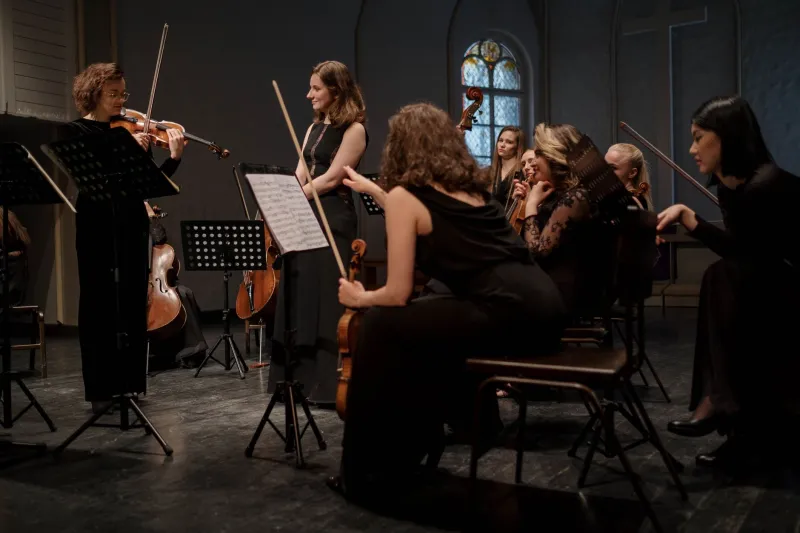
These mobile interventions are not stopgap measures. They represent a philosophical commitment: that live, in-person performance carries an irreplaceable social function that no streaming platform, however well-funded, can replicate. The shared experience of watching a story unfold in real time, alongside neighbors and strangers, builds the kind of communal bonds that are essential to civic life—and that are especially vital in communities already contending with economic isolation.
The Low-Tech Screening Movement
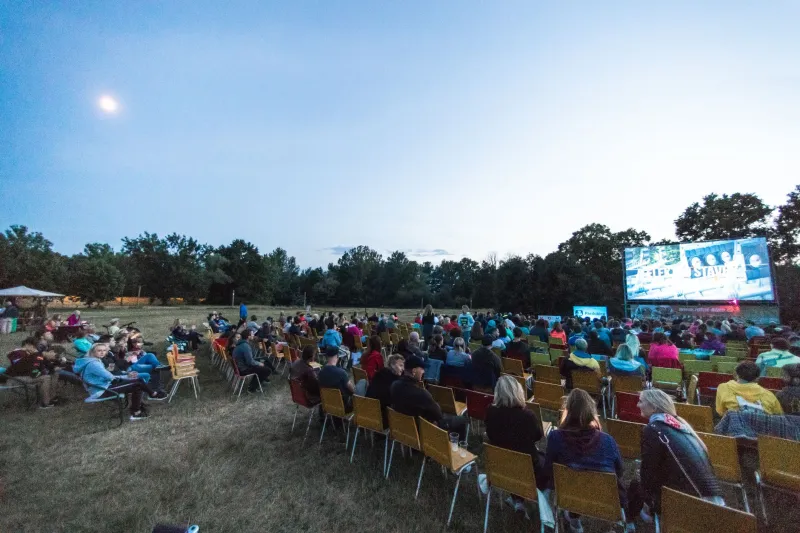
For communities where even mobile stages cannot reach, a parallel movement has emerged around communal film and recorded-performance screenings. The approach is deliberately simple: a projector, a screen or white wall, folding chairs, and a community gathering space. What makes these events meaningful is not the technology but the intentionality behind them.
Organizations like Big Sky Documentary Film Festival in Missoula, Montana, have developed outreach arms that bring curated film programs to small towns across the Northern Rockies, partnering with local libraries, community centers, and VFW halls. The screenings are often accompanied by facilitated discussions—connecting rural audiences not just to art but to the broader cultural conversations that urban arts institutions take for granted.
This model has found a particularly strong foothold in Native communities. The Sundance Institute's Indigenous Program has long worked to bring Indigenous cinema to tribal nations where connectivity is severely limited. Their community screening kits—which include projection equipment, discussion guides, and filmmaker Q&A recordings—allow local organizers to host meaningful cultural events without requiring broadband infrastructure at all.
The deliberate, low-tech character of these programs also carries an implicit political message. It refuses to treat rural and Indigenous communities as passive recipients of whatever the digital economy happens to offer. Instead, it positions them as active participants in shaping their own cultural landscape.
Hybrid Models That Center Community, Not Technology
Some organizations are threading an especially careful needle, designing hybrid experiences that use digital tools where they are available while building in analog alternatives for those who are not. The ArtsWave initiative in the Cincinnati region, for example, has developed a model in which live community viewing events are organized around streamed performances—but the emphasis is placed on the gathering itself rather than on the quality of the stream. Participants bring potluck dishes, engage with local artists before and after the broadcast, and participate in community discussions that transform a passive viewing experience into an active cultural event.
The lesson these organizations have absorbed is one that progressive arts advocates have argued for years: access is not merely a technical problem. Providing a URL to a livestream does not constitute cultural equity. Genuine access requires investment in the social infrastructure—the trusted community relationships, the welcoming physical spaces, the culturally competent facilitation—that allows people to actually show up and engage.
Policy Failures and the Advocacy Imperative
For all the creativity these organizations are demonstrating, practitioners are clear-eyed about the structural conditions that make their work necessary in the first place. The digital divide is not an accident; it is the product of decades of underinvestment in rural telecommunications infrastructure, compounded by a regulatory environment that has historically favored large commercial carriers over community-based broadband solutions.
The Biden administration's Infrastructure Investment and Jobs Act allocated $65 billion toward broadband expansion, representing the largest federal investment in connectivity in the nation's history. Arts advocates have cautiously welcomed this commitment while noting that broadband alone will not resolve the cultural access crisis. Even communities with adequate connectivity frequently lack the organizational capacity, funding, and institutional relationships necessary to translate digital access into genuine cultural participation.
What is needed, advocates argue, is a policy framework that treats arts access as a public good—one that funds not just infrastructure but the community organizations doing the painstaking, relationship-intensive work of cultural programming in underserved areas. The National Endowment for the Arts' Our Town program represents one meaningful step in this direction, providing grants for creative placemaking projects in rural and tribal communities. But its funding levels remain modest relative to the scale of the need.
The Compass Points Inward
There is something instructive in the fact that the most innovative responses to the digital divide are emerging not from technology companies or major arts institutions but from small, community-embedded organizations with deep local knowledge and genuine accountability to the people they serve. Their work is a reminder that the most important navigation tool in cultural access is not bandwidth—it is trust.
As the broader arts sector continues to grapple with questions of equity and inclusion, the experiences of organizations working in broadband deserts offer a clarifying lesson. The goal of arts access has never been to deliver content; it has been to create the conditions under which communities can encounter, interpret, and contribute to the living culture of their time. That work requires presence. It requires showing up. And it requires a willingness to let the community—not the platform—set the terms of engagement.