The Encore Educators: Retired Teachers Are Quietly Saving Arts Programs in America's Most Underfunded Schools
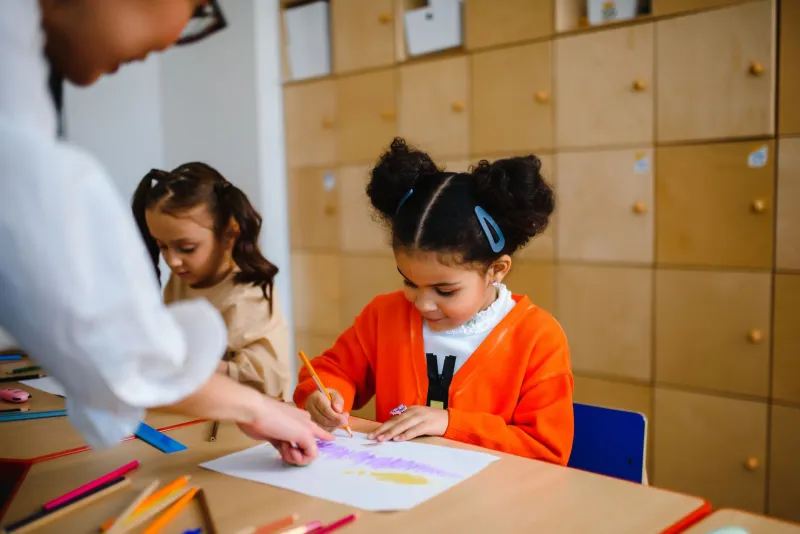
Eleanor Marsh spent thirty-one years teaching seventh-grade English in a mid-sized Ohio district before retiring at sixty-three with a pension, a garden, and a long-deferred plan to take ceramics classes. Within eighteen months, she was back in a school building—not as a substitute, but as a volunteer teaching artist in an elementary school twenty minutes from her home, a Title I campus that had not had a dedicated visual arts instructor in four years.
"I thought I was done," she says, laughing. "And then I walked into that building and saw the empty art room and I thought, 'No. Not yet.'"
Marsh is part of a growing, largely informal movement of retired educators who are returning to classrooms not out of financial necessity but out of something harder to name: a conviction that children in under-resourced schools deserve creative education, and a recognition that they themselves have something irreplaceable to offer.
The Crisis They Are Answering
The scale of arts education disinvestment in low-income American school districts is difficult to overstate. A 2022 analysis by the Education Trust found that schools serving predominantly low-income students were significantly less likely to offer arts courses than their wealthier counterparts, and far less likely to employ certified arts specialists. Budget cuts enacted during the 2008 recession eliminated thousands of arts teaching positions; many were never restored. The COVID-19 pandemic accelerated further losses.
The consequences are not merely aesthetic. Decades of research document the relationship between sustained arts education and outcomes including literacy development, social-emotional learning, school attendance, and the capacity to think critically across disciplines. When arts programs disappear from low-income schools, they disappear from precisely the students who have the fewest alternative pathways to creative development.
Formal solutions—increased per-pupil funding, revised certification requirements, expanded federal arts education grants—remain stalled in legislative gridlock. Into that gap, retired educators have begun to move.
What Retired Teachers Bring That Others Cannot
The value of a retired teacher in a classroom is not simply a matter of availability. It is a matter of a specific and hard-won competency: the ability to hold a room.
Teaching artists who come directly from arts backgrounds—however talented—often arrive without formal training in classroom management, differentiated instruction, or the particular social dynamics of schools serving students experiencing poverty, trauma, or language barriers. They learn on the job, sometimes brilliantly, but the learning curve is real and the stakes for students are high.
Retired teachers bring the inverse skill set. They know how to read a classroom, how to redirect a student who is shutting down, how to scaffold an activity for a child three grade levels behind without drawing attention to the gap. What they are learning—or relearning—is the specific discipline: the painting technique, the musical notation, the dramatic structure.
The combination, when it works, is remarkable. "She knows when I'm about to lose a kid before I do," says Marcus Delgado, a twenty-eight-year-old theater teaching artist who has co-facilitated drama workshops with retired educator Patricia Simmons at a Houston middle school for two years. "And she's learned so much about improv that she's actually better at some of the warm-up exercises than I am now."
Programs Building the Infrastructure for This Work
While many retired teacher-mentors operate informally—responding to a principal's plea, a former colleague's request, or a community organization's outreach—a number of nonprofits have begun building programmatic infrastructure to support and expand the model.
TeachArtsTX, based in Dallas, recruits retired educators specifically for placement in high-need campuses, providing them with a structured orientation in arts integration pedagogy and pairing them with working teaching artists for their first semester. The program has placed more than sixty retired educators in twenty-three schools since its founding in 2019, and its internal data suggest that students in classrooms with retired educator mentors show higher rates of sustained arts participation than those in comparable classrooms without them.
In Detroit, the nonprofit Second Stage Arts operates a fellowship model in which retired teachers commit to a two-year placement in a single school, allowing them to build the kind of sustained relationships with students and faculty that short-term residencies rarely permit. Fellows receive a modest stipend—enough to cover transportation and materials—and participate in monthly cohort gatherings designed to address the particular challenges of returning to an institutional environment after retirement.
"The stipend matters less than people think," says Second Stage's executive director. "What keeps people coming back is the relationships. They fall in love with these kids. That's not a metaphor—it's what happens."
The Intergenerational Dimension
Beyond the immediate educational benefit, the presence of older adults in arts classrooms creates something that researchers in the field of intergenerational learning have documented extensively: a shift in how young people understand the arc of a human life.
For students in communities marked by economic precarity and limited exposure to professional diversity, an older adult who has built a full career and is now pursuing creative growth by choice offers a quietly radical model. It suggests that learning does not end, that creative identity is not the exclusive province of youth, and that the relationship between work and meaning can be renegotiated across a lifetime.
Several students interviewed for this article used strikingly similar language to describe their retired mentors: "She does it because she wants to." That observation—seemingly simple—carries genuine weight for children who have rarely encountered adults in educational settings who appear to be acting from intrinsic motivation rather than professional obligation.
The Question the Movement Cannot Answer Alone
It would be a serious mistake to allow the generosity of retired educators to obscure the policy failure their presence represents. No school system in a wealthy nation should depend on the volunteer labor of retirees to provide basic creative education to its children. The fact that this labor is freely given, and that it is often extraordinary in its quality, does not make the underlying disinvestment acceptable.
Advocates within the retired educator movement are largely the first to say so. "I love this work," Eleanor Marsh says carefully. "And I want it to be unnecessary. I want there to be a certified, full-time art teacher in every one of these buildings. Until that happens, I'll keep showing up. But let's be clear about what we're patching."
The encore educators are filling a gap. The question for policymakers, school boards, and the public is whether they are willing to close it.