From Wall to Podium: How Community Mural Projects Are Training the Next Generation of Neighborhood Advocates
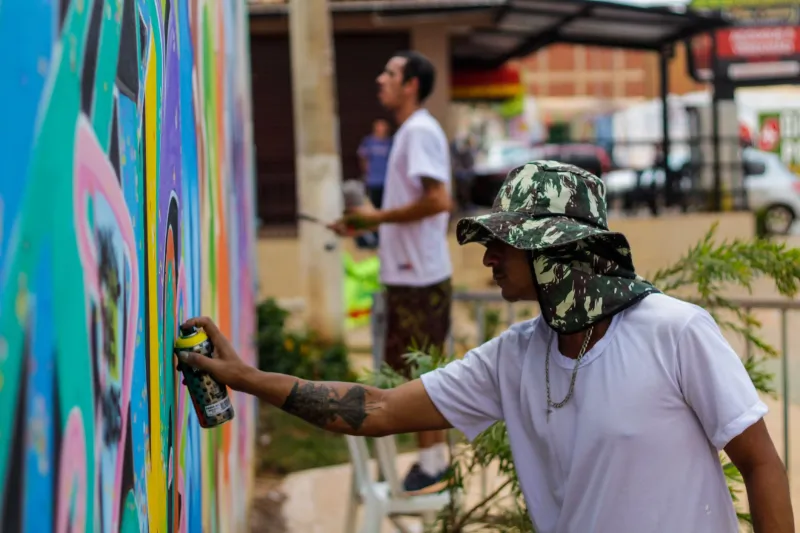
Attend any housing rights meeting in a city that has invested seriously in participatory public art, and you are likely to notice something: a disproportionate number of the most effective speakers, the residents who stand at the microphone with clarity and composure and something that looks like practiced confidence, have a background in community mural work. This is not coincidence. It is curriculum.
The connection between collaborative public art and civic capacity is not widely discussed in policy circles, where arts funding is still routinely justified through tourism metrics and economic impact studies. But among the educators, organizers, and community development practitioners who work at street level, the relationship is understood as fundamental—and increasingly, it is being intentionally designed.
The Mural as Democratic Process
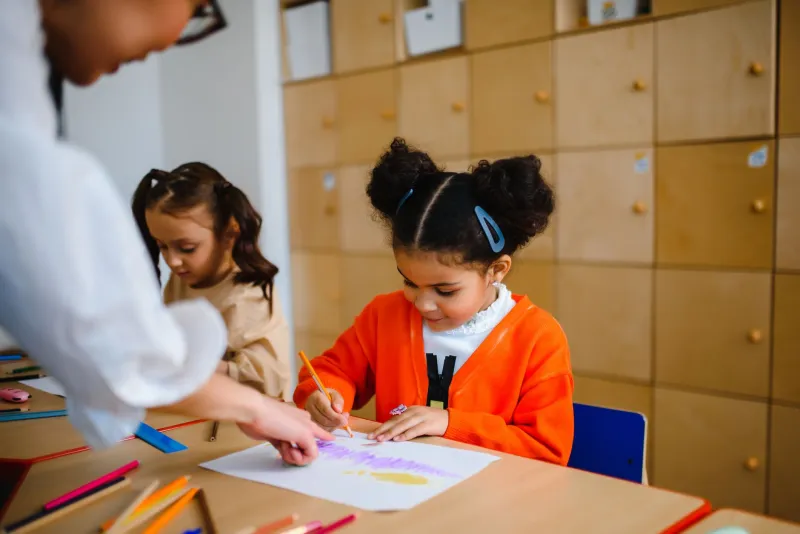
A community mural project, undertaken with genuine participatory integrity, is an exercise in democratic practice from start to finish. Before a single brushstroke is applied to a wall, participants must negotiate competing visions, navigate disagreement, synthesize divergent perspectives into shared imagery, and ultimately commit to a collective decision that will be visible to their entire neighborhood.
"People think the mural is the outcome," says the artistic director of a community development organization in Philadelphia that has facilitated more than thirty participatory murals over the past decade. "The mural is the artifact. The outcome is the people who made it."
Her organization has tracked participants over time and documented a consistent pattern: residents who complete a full mural process—from community listening sessions through design workshops to installation—are significantly more likely to attend neighborhood association meetings, speak at public hearings, and run for positions on local advisory boards within two years of project completion.
The organization recently formalized this observation into a research partnership with a local university, seeking to document what practitioners have long observed anecdotally: that the structure of participatory art-making is, functionally, a training program in civic agency.
Negotiation as a Transferable Skill
In a predominantly Black neighborhood in Baltimore that has faced decades of disinvestment and a more recent wave of displacement pressure from adjacent gentrification, a mural initiative launched three years ago has produced outcomes that extend well beyond its painted walls.
The project, organized by a neighborhood-based arts nonprofit in partnership with a local housing advocacy coalition, brought together forty residents ranging in age from fourteen to seventy-two. Over six months, they met biweekly to design a mural that would address the neighborhood's history, present circumstances, and aspirations for the future.
The process was, by all accounts, difficult. Participants disagreed sharply about whether the imagery should foreground celebration or critique, historical legacy or present urgency. Facilitators deliberately held space for those disagreements rather than resolving them prematurely.
"We could have smoothed it over and given everyone a piece of what they wanted," reflects the lead facilitator. "Instead, we worked through it. We asked: what is the argument we are all willing to make together? That is a political skill. That is exactly what you need when you walk into a room with a city councilmember."
Several participants from that project have since become prominent voices in the neighborhood's tenant organizing network. One, a woman in her mid-fifties who had never previously attended a public meeting, delivered three-minute testimony before the city's housing authority last spring. She credits the mural process explicitly.
"I learned that I had something to say that other people needed to hear," she explains. "I learned that in the mural meetings. I practiced it there before I ever knew I would need it somewhere else."
Designing Civic Infrastructure Into the Art Process
The most sophisticated programs are now intentionally engineering the link between artistic participation and civic engagement, rather than allowing it to emerge organically. In Los Angeles, a nonprofit that works in predominantly Latino neighborhoods in the eastern San Fernando Valley has developed a mural curriculum that explicitly incorporates civic education alongside artistic training.
Participants learn about local land-use policy, school board governance structures, and the mechanisms of participatory budgeting while simultaneously developing mural concepts that engage with those systems. The organization partners with civic education nonprofits to bring in guest facilitators who can speak to both the political and the aesthetic dimensions of community self-determination.
"We are not hiding the ball," says the program's co-founder. "We tell participants from day one: this project is about art, and it is also about power. We want you to understand both."
The curriculum has produced measurable results. In one neighborhood, participants from a mural cohort collectively organized a successful campaign to restore arts programming to two elementary schools that had eliminated it under budget pressure. The campaign included a public presentation to the school board that several observers described as unusually polished and strategically sophisticated for a community group with no prior organizing experience.
The Question of Authentic Participation
Not all mural projects are created equal, and practitioners are emphatic that the civic benefits described here are contingent on genuine participatory process—not the simulacrum of community engagement that sometimes passes for it.
"There is a version of community murals where an outside artist arrives with a design, lets a few residents paint some sections, and calls it participatory," says a public art scholar who has studied community mural programs in twelve cities. "That produces a mural. It does not produce civic capacity. In fact, it can reinforce exactly the dynamic of exclusion that authentic participation is meant to disrupt."
The distinction matters enormously for funders and municipal arts agencies that are increasingly interested in the civic dimensions of public art. Investing in genuine participatory process requires significantly more time, more facilitation expertise, and more tolerance for productive conflict than conventional public art commissioning. It also requires a willingness to cede creative control in ways that institutional funders do not always find comfortable.
A New Case for Arts Investment
For advocates working to defend and expand arts funding in an era of persistent austerity and skepticism toward cultural investment, the civic capacity argument offers a compelling and underutilized frame. When a mural project produces not only a beautiful wall but a cohort of residents who are now showing up at zoning hearings and school board meetings—residents who previously had no relationship to those institutions—the return on investment extends far beyond what any tourism study can capture.
"We have been making the case for arts funding on the wrong grounds for decades," argues a policy advocate who works with community development financial institutions on arts-integrated neighborhood investment strategies. "We talk about economic impact and visitor spending. We should be talking about democratic participation. We should be talking about what happens when people who have been systematically excluded from civic life find their voice through a paintbrush."
The wall, in this telling, is not the destination. It is the first sentence of a longer conversation—one that continues, with increasing confidence and sophistication, in the rooms where decisions about neighborhoods, schools, and futures are actually made.