Inherited Healing: How Asian American Arts Traditions Are Opening New Pathways Through Mental Health Stigma
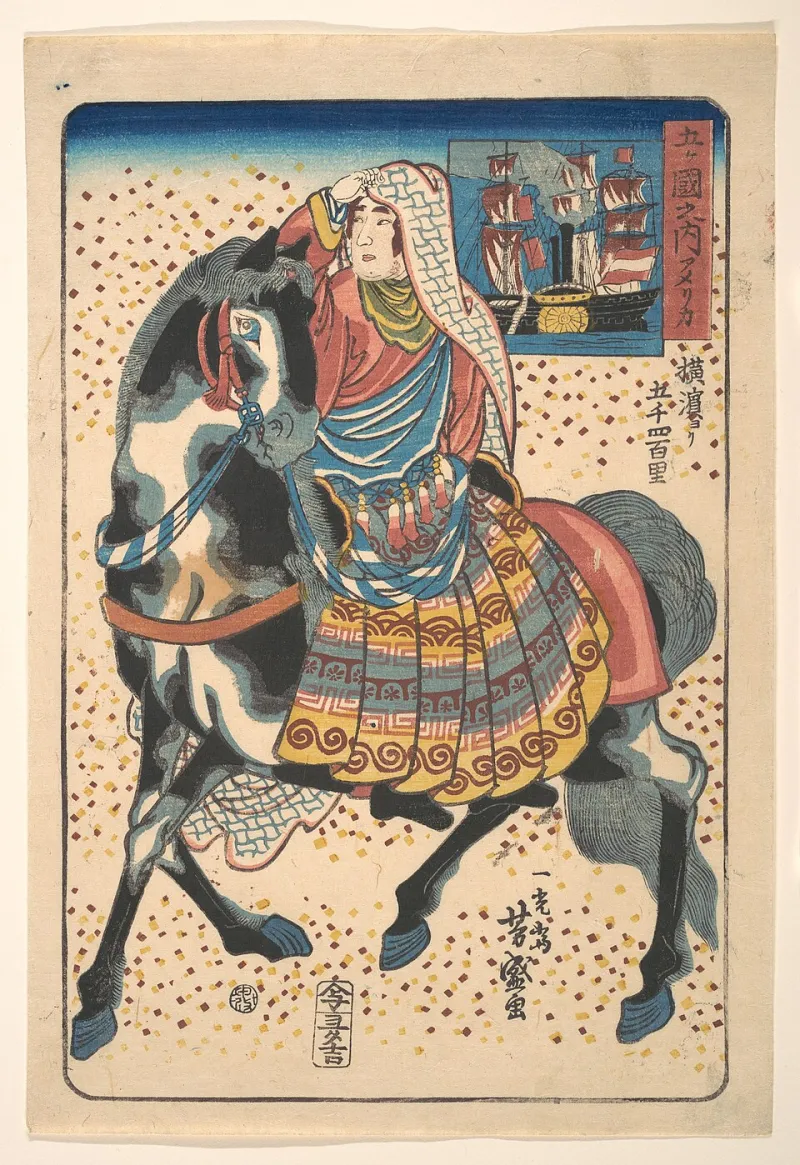
Photo: Utagawa Yoshimori, CC0, via Wikimedia Commons
There is a particular kind of silence that many Asian Americans learn early. It is not the silence of emptiness but the silence of discipline—a practiced quiet around suffering that is often mistaken, from the outside, for resilience. Within many Asian cultural frameworks, emotional difficulty is something to be managed privately, transcended through effort, or simply not named. Mental illness, in particular, carries a weight of familial shame that can make the prospect of seeking help feel like an act of betrayal.
For community organizations working at the intersection of Asian American identity and mental wellness, this cultural architecture presents both a challenge and an opening. If Western clinical language cannot easily enter through the front door, perhaps traditional art forms can open a different passage entirely.
The Limits of Borrowed Frameworks
Conventional mental health services in the United States were largely designed around Euro-American cultural norms—individualistic, verbally expressive, and oriented toward personal disclosure in one-on-one or small-group clinical settings. For many Asian American communities, these frameworks carry implicit assumptions that can feel alienating or even counterproductive.
"When you tell someone from a collectivist cultural background to focus on their individual feelings and talk about their personal trauma to a stranger, you are asking them to violate a deeply held cultural value," explains the program director of a Taiwanese American arts and wellness organization based in Los Angeles. "It is not resistance. It is a mismatch. And the response to a mismatch should not be to pathologize the patient."
This recognition has driven a significant shift among Asian American arts organizations, which are increasingly designing programming that treats cultural practice not as a supplement to mental health work but as its primary medium.
Calligraphy and the Discipline of Presence
In a community center in Chicago's Chinatown neighborhood, weekly calligraphy workshops have become one of the most quietly radical mental health interventions in the city—though neither the participants nor the facilitators would necessarily use that language to describe them.
The workshops, offered free of charge to adults of all ages, are structured around the traditional practice of Chinese brush calligraphy. Participants learn to control breath, posture, and pressure as they form characters. The facilitator, a trained calligrapher who also holds a master's degree in social work, describes the practice as "a form of embodied attention."
"When you are holding a brush and making a stroke, you cannot be in the past or the future," she says. "You are entirely in the present moment. For someone who is carrying anxiety or grief, that is not a small thing. That is medicine."
Participant feedback gathered informally over two years of programming reveals a consistent pattern: people who arrived describing themselves as "stressed" or "overwhelmed" report that the workshops provide a quality of relief that feels distinct from, and in some cases more accessible than, formal therapy. Several participants have noted that the cultural familiarity of the practice—many grew up watching elders write in this tradition—creates an emotional safety that clinical environments have not replicated.
Movement as Memory and Medicine
In the San Francisco Bay Area, a Korean American arts collective has developed a program integrating traditional dance forms—including elements of pungmul, a communal percussion and movement tradition—into mental health support programming for Korean American women navigating intergenerational trauma.
The program emerged from a frank community needs assessment that revealed high rates of depression and anxiety among participants, alongside near-universal reluctance to engage with conventional counseling services. Facilitators spent two years in community consultation before designing a curriculum that centers movement and collective rhythm as primary tools.
"Pungmul was never a private art form," explains the program's lead facilitator, a dancer and community health advocate. "It was always about the group moving together. When you are in that circle, you are not an isolated individual with a problem. You are part of something that has existed for centuries. That repositioning matters enormously for healing."
The program has documented—through participant surveys and facilitated reflection sessions—significant reductions in self-reported isolation and marked increases in participants' willingness to discuss emotional experiences with family members following program participation. Several participants have subsequently entered individual therapy for the first time, describing the collective arts experience as having created enough safety to make that step imaginable.
Martial Arts and the Reclamation of Agency
For younger Asian Americans grappling with racialized trauma—a category that has expanded dramatically following the rise in anti-Asian violence during and after the COVID-19 pandemic—martial arts programs offered through community organizations have emerged as another form of culturally resonant healing.
A Vietnamese American community center in Houston offers tai chi and wing chun instruction specifically framed around themes of bodily sovereignty and collective protection. The programming was redesigned in 2021 in direct response to community grief following a surge in anti-Asian hate incidents.
"We were watching our elders being attacked on the street, and young people in our community were experiencing profound fear and helplessness," says the center's youth program coordinator. "We could have offered a talk group. Instead, we offered practice—because in our tradition, the body holds knowledge that words cannot always reach."
The framing is deliberate: these are not self-defense classes in the conventional sense, but community practices that use physical discipline to rebuild a sense of agency and rootedness in young people whose safety has been violated.
Designing Toward Cultural Dignity
What unites these varied programs is a shared philosophical commitment: that healing for Asian American communities must be designed with, not merely for, those communities—and that cultural identity is not an obstacle to mental wellness but its potential foundation.
This perspective has significant implications for policy. As the United States continues to grapple with a national mental health crisis that falls disproportionately on communities of color, the question of how public and philanthropic funding is directed toward culturally responsive programming becomes urgent.
"If we keep funding only models that were designed for a narrow demographic, we will keep getting narrow outcomes," says the director of a national coalition supporting Asian American mental health initiatives. "The art is not a workaround. It is the evidence base. It is what actually works."
For the participants in these programs—the calligrapher who arrives tense and leaves quieted, the dancer who finds herself speaking to her mother about grief for the first time in years, the young man who walks differently after months of practice—the evidence is not abstract. It is written in the body, inherited from ancestors who knew, long before the clinical literature confirmed it, that beauty and belonging are conditions of survival.