Beyond the Ramp: What Genuine Welcome Actually Looks Like in America's Arts Spaces
Consider the experience of arriving at a performance. You have found transportation—no small feat if you rely on paratransit. You have secured childcare, or brought your children and hoped for the best. You have navigated the question of what to wear, what to expect, how to behave in a space whose unwritten codes were not written for you. You have managed the cost of a ticket, perhaps after a transaction that required a credit card you may not have. And then you arrive to find that the accessible seating is in the back row, far from your companions, with a partially obstructed sightline.
This is not a hypothetical. It is a composite drawn from accounts gathered by disability justice advocates, low-income arts participants, and researchers studying cultural access across the United States. It illustrates a foundational truth that the most thoughtful arts organizations are now building their practice around: accessibility is not a feature. It is a philosophy. And most American arts venues have barely begun to practice it.
The Compliance Trap
The Americans with Disabilities Act, enacted in 1990, established a floor for physical accessibility in public accommodations. That floor—ramps, accessible restrooms, assistive listening devices, designated seating—was a genuine and important advance. It was also, by design, a minimum. And for too many institutions, the minimum became the ceiling.
"Compliance thinking asks, 'What do we legally have to do?'" says a disability rights consultant who has worked with performing arts organizations in seven states. "Genuine accessibility thinking asks, 'What would it take for every person who might want to be here to actually be able to be here—and to have a good experience once they arrive?' Those are completely different questions."
The gap between them is where most organizations currently live. The ramp exists. The accessible parking spaces are marked. The large-print programs are available upon request. And the communities that the ADA was designed to include remain, in many venues, conspicuously absent.
Sensory Access as a Design Priority
For neurodivergent individuals and those with sensory processing differences, the physical accessibility of a space is often less relevant than its sensory environment—and most arts venues are sensory nightmares by design.
The combination of dim lighting, sudden loud sounds, large crowds, unfamiliar smells, and the implicit social demand to sit still and be quiet for extended periods creates conditions that are genuinely prohibitive for many autistic individuals, people with anxiety disorders, trauma survivors, and young children. The standard institutional response has been to offer occasional "sensory-friendly" performances as a separate, often stigmatized category—a solution that, while useful, implicitly reinforces the idea that the default experience is not for everyone.
Organizations at the leading edge of sensory access design are beginning to ask a different question: not "How do we create a separate track for people who can't handle our normal programming?" but "How do we redesign our normal programming so that more people can access it comfortably?"
The Isabella Stewart Gardner Museum in Boston, for example, has worked with disability advocates to identify specific environmental modifications—adjusted lighting levels in certain galleries, designated quiet zones, clear visual guides for navigating the space—that improve the experience for sensory-sensitive visitors without diminishing it for others. The modifications required no structural renovation. They required attention.
The Economics of the Threshold
For low-income families, the barrier to arts participation is frequently not the ticket price alone but the full economic weight of attendance: transportation, parking, childcare, concessions, appropriate clothing, and the accumulated cost of navigating a space that assumes a level of material comfort many families do not have.
Arts organizations that have taken this seriously have moved well beyond discounted tickets. The Cincinnati Arts Association's ACCESS program, for instance, offers not only free and reduced-price tickets to qualifying residents but also transportation vouchers and pre-visit orientation materials designed to demystify the experience of attending a performance for families who have never done so. The orientation materials—available in multiple languages—explain what to expect, what to wear, where to go when you arrive, and what happens if a child needs to leave in the middle of a show.
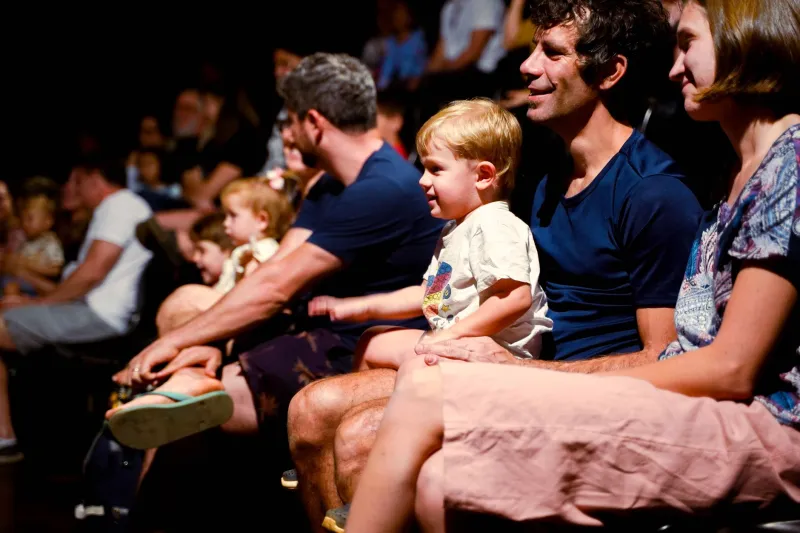
That last detail matters more than it might appear. One of the most significant deterrents to arts attendance among families with young children is the fear of disruption—the anxiety that a restless toddler or an overwhelmed child will draw judgment from other attendees and staff. Organizations that explicitly communicate a welcoming attitude toward children and families, and that train their front-of-house staff to reinforce that message, report measurable increases in attendance from demographics that had previously been underrepresented.
Cultural Navigation and the Invisible Curriculum
Perhaps the least-discussed dimension of accessibility is what scholars call "cultural navigation"—the unspoken knowledge required to participate comfortably in a given institutional environment. Every arts venue has an implicit curriculum of expected behaviors, dress codes, social rituals, and aesthetic frameworks that are legible to those who grew up with exposure to that institution and opaque to those who did not.
For many communities of color, immigrant families, and first-generation arts attendees, this invisible curriculum is the most significant barrier they face. The physical space may be technically accessible. The ticket price may be manageable. But the social experience of not knowing how to behave, of feeling watched or out of place, of encountering programming that does not reflect one's own cultural reference points—these are barriers that no ramp can address.
Organizations that have engaged seriously with this dimension have done so through community ambassadors—trusted individuals from specific communities who serve as cultural bridges, accompanying first-time attendees, providing context, and feeding observations back to organizational leadership. The Apollo Theater in Harlem has long operated on a model of deep community embeddedness that renders many of these barriers moot; its programming, its staff, and its institutional identity are legible to the communities it serves in a way that many mainstream arts venues are not.
Designing for the Person Who Almost Didn't Come
The most useful frame for thinking about accessibility, according to practitioners who have done this work most thoughtfully, is to design for the person who almost didn't come—the person who navigated ten barriers to reach your threshold and arrived already exhausted, already half-expecting to feel unwelcome.
What does that person need? They need to be greeted warmly by someone who looks like they might understand why showing up was hard. They need clear, jargon-free information about what is going to happen and what is expected of them. They need to know that if something goes wrong—if their child cries, if they need to step out, if they cannot follow the program—someone will help them without judgment.
They need, in short, to feel that the space was built with them in mind.
For most American arts institutions, that feeling remains aspirational. But the organizations that have committed to it—not as a compliance exercise but as an expression of their deepest values—are discovering something that should not be surprising: when people feel genuinely welcome, they come back. And they bring others with them.