Simmering With Meaning: How Families Are Transforming the Kitchen Into a Living Classroom for Cultural Survival
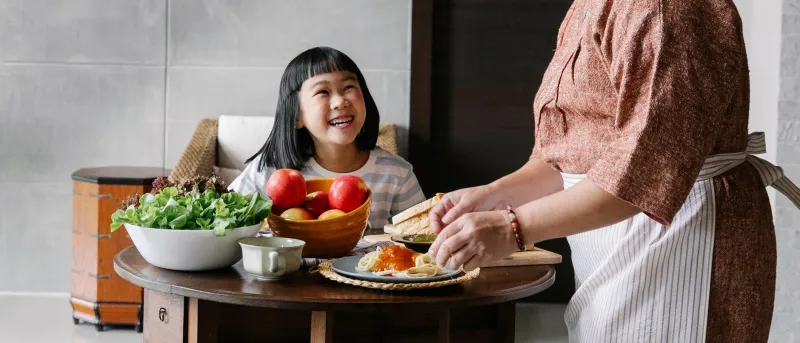
On a Saturday morning in a modest apartment in Chicago's Pilsen neighborhood, three generations of the Mendoza family are gathered around a kitchen counter. Seventy-two-year-old Abuela Carmen is guiding her granddaughter's hands through the precise motion of pressing masa into a smooth, even circle. The lesson is not merely culinary. As the tortillas take shape, Carmen narrates in Spanish—pausing to translate, to explain, to remember aloud. Her granddaughter, fourteen-year-old Sofia, who was born in the United States and speaks English as her primary language, listens with an attention she rarely brings to a classroom desk.
"She learns more about who she is in this kitchen than anywhere else," says Sofia's mother, Daniela Mendoza, a community health worker and first-generation college graduate. "The food carries everything—the stories, the language, the reason we came here."
This scene, replicated in countless forms across the country, is drawing increasing attention from educators, anthropologists, and cultural advocates who argue that the American kitchen—particularly within immigrant and historically marginalized households—functions as one of the most pedagogically rich environments available to communities working to preserve what institutional schooling rarely teaches.
More Than a Recipe: The Curriculum Hidden in Every Dish
The conventional understanding of culinary tradition centers on recipes as artifacts—documents to be preserved, passed down, perhaps digitized. But scholars and community practitioners increasingly challenge this framing. What is transmitted in kitchens, they argue, is not a recipe but an entire epistemology: a way of knowing the world through sensory engagement, oral narration, embodied memory, and relational practice.
Dr. Amara Osei-Bonsu, a cultural education researcher at a public university in the Midwest, has spent the past several years documenting what she calls "kitchen pedagogy" among West African diaspora families in Columbus, Ohio. Her fieldwork reveals that cooking sessions routinely function as sites where children acquire vocabulary in heritage languages, receive instruction in familial and communal values, and develop an understanding of historical migration that no textbook adequately conveys.
"When a grandmother teaches a grandchild to prepare jollof rice, she is simultaneously teaching the name of every ingredient in Twi, explaining why certain spices were substituted when the family arrived in America, and narrating the social context in which that dish has meaning," Dr. Osei-Bonsu explains. "That is a multi-subject curriculum delivered in a single afternoon."
Bridging the Generational Fracture
For many families, the kitchen has also become the site where intergenerational fractures—accelerated by assimilation pressures, economic displacement, and the cultural dissonance of immigrant life—are quietly, persistently repaired.
Research on second- and third-generation immigrant youth consistently identifies a painful sense of cultural in-betweenness: neither fully American in the eyes of peers nor fully connected to ancestral heritage in the eyes of elders. This identity dissonance carries documented mental health consequences, including elevated rates of anxiety, depression, and social isolation among adolescents navigating bicultural identities.
Yet practitioners working in community-based cultural programs report that food-centered family engagement frequently disrupts this pattern in ways that more formal interventions struggle to replicate.
Maria Tran, who coordinates a Vietnamese cultural heritage program for youth in Houston, Texas, describes the transformation she witnesses when teenagers who initially resist participation in traditional cooking workshops begin to engage with the material on their own terms. "They come in thinking it's not relevant to them. Then something shifts. They start asking questions—about the war, about why their grandparents left, about words they've heard but never understood. The food opens a door that nothing else could."
Tran's program pairs youth with elder community members for structured cooking sessions that are explicitly framed as educational exchanges rather than simple activities. Elders are trained to narrate their process, to share the historical and emotional context of each dish, and to invite questions. Youth participants are encouraged to document what they learn—through journaling, recorded interviews, or visual art—transforming personal family knowledge into community-held cultural record.
Language Reclamation at the Stove
Among the most striking dimensions of kitchen-based cultural education is its role in heritage language acquisition and reclamation. Linguists have long noted that language learning is most effective when embedded in meaningful, contextually rich activity. The kitchen, it turns out, provides precisely this environment.
For families whose heritage languages have eroded across generations under the pressure of English-dominant schooling and social environments, cooking together offers a natural framework for reintroducing ancestral vocabulary in context. The names of ingredients, measurements expressed in culturally specific terms, instructions passed down in idioms that resist direct translation—all of these become linguistic anchors that formal language instruction rarely provides.
In the Somali community of Minneapolis, a grassroots initiative led by a collective of mothers has begun hosting structured cooking gatherings specifically designed to reintroduce Somali language to children who were born or raised primarily in the United States. Organizer Hodan Warsame describes the sessions as "language baths."
"We cook, and we only speak Somali. The children are immersed without feeling like they're being drilled," she says. "By the end, they've learned thirty new words without realizing it, and they've also learned something about themselves."
Institutions Take Notice
The growing recognition of culinary tradition as a legitimate educational framework is beginning to influence institutional practice, albeit gradually. Several community health centers and cultural nonprofits across the country have begun integrating structured cooking programs into their educational and mental health offerings, citing evidence that food-centered engagement improves outcomes in areas ranging from language development to emotional well-being.
A handful of public school districts in cities with large immigrant populations have piloted after-school programs that invite family members to serve as cultural instructors in cooking-based heritage education sessions. Early assessments suggest these programs strengthen school-family relationships while improving student engagement and cultural self-esteem—outcomes that align with broader equity goals in education policy.
Advocates, however, caution against institutional co-optation of practices that derive their power precisely from their informality and intimacy. The kitchen works as a classroom, they argue, because it is not a classroom—because it operates outside the structures of assessment, standardization, and authority that frequently alienate the very communities these programs seek to serve.
"The moment you put a rubric on it, you lose what makes it sacred," says Dr. Osei-Bonsu. "The goal is to support these practices, to resource them, to give them visibility—not to institutionalize them into something unrecognizable."
A Compass Toward Belonging
For families like the Mendozas in Pilsen, the question of how to transmit culture to children growing up in a country that frequently devalues their heritage is not an abstract policy concern. It is an urgent, daily negotiation.
What they have found—intuitively, and in the company of communities across the country arriving at similar conclusions—is that the answer may be as close as the kitchen counter. In the press of masa, the fragrance of spices, the cadence of a grandmother's voice narrating in a language her granddaughter is only beginning to reclaim, something essential is being preserved.
Not merely a recipe. A world.
And in communities where that world has been threatened by displacement, discrimination, and assimilation, keeping it alive—one shared meal at a time—is among the most radical educational acts imaginable.