Voices Rising From the Valley: How Rural Singing Circles Are Becoming Sacred Spaces for Collective Grief
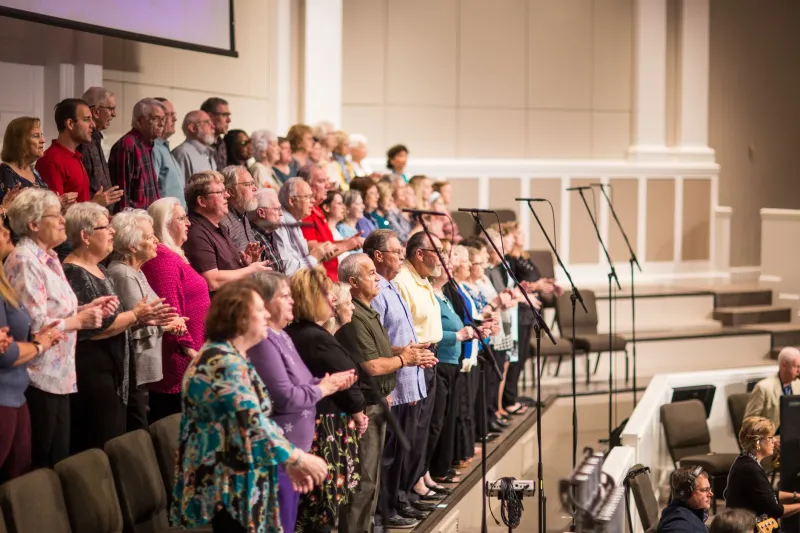
On a Tuesday evening in a small Appalachian community center in eastern Kentucky, roughly fourteen people arrange folding chairs into a loose circle. There is no conductor standing at the front of the room, no sheet music propped on a stand, and no audition that preceded their arrival. What they share is not a polished repertoire but a particular kind of weight—the weight of loss, of economic hardship, of neighbors who have moved away or passed on. And what they do with that weight, for the next ninety minutes, is sing.
This is not a choir in any conventional sense. It is something older, something more elemental. And it is happening with increasing frequency across rural America.
A Tradition Reclaimed
The notion of singing as a communal response to grief is not new. Shape-note singing traditions, Sacred Harp gatherings, and lining hymns all carry deep historical roots in the rural South and Appalachian regions. African American spiritual traditions have long understood the choir as a vessel for collective sorrow as much as collective joy. What is emerging now, however, is distinct from formal religious practice or organized performance culture. These contemporary singing circles are deliberately informal, intentionally non-hierarchical, and increasingly understood by their participants—and by a small but growing number of community health advocates—as spaces of genuine emotional restoration.
The people who attend them are often not musicians. Many have never sung in public before. What draws them, organizers report, is precisely the absence of expectation. There is no right way to participate. You may hum. You may weep. You may sit quietly for several weeks before your voice joins the others. The only requirement is presence.
The Geography of Grief
Rural America has, over the past several decades, absorbed compounding losses that urban policy conversations frequently underestimate. Plant closures, opioid devastation, agricultural consolidation, and the slow erosion of social infrastructure—hospitals, schools, local newspapers, houses of worship—have created communities where grief is both pervasive and chronically underserved. Mental health providers are scarce. The nearest licensed therapist may be an hour's drive away, assuming the roads are passable and the gas affordable.
Into this landscape, singing circles have arrived not as a substitute for professional care but as something communities are generating from within themselves. They are, in the language of public health, a grassroots mutual aid response—one that happens to be ancient, embodied, and remarkably effective at reducing social isolation.
Researchers studying communal singing have documented physiological responses that align closely with stress reduction: decreased cortisol levels, increased oxytocin production, and synchronized breathing patterns among participants. A 2017 study published in ECancer Medical Science found that choir singing improved quality of life and reduced distress among cancer patients. More recent ethnographic work has pointed to similar emotional benefits in non-clinical, community-based settings. But the rural singing circle organizers themselves rarely speak in clinical terms. They speak about what they have witnessed.
"You Don't Have to Be Good. You Just Have to Show Up."
In a small town in rural West Virginia, a retired schoolteacher named Margaret—who asked that her last name not be used—began hosting singing gatherings in her living room following the death of her husband of forty-one years. What started as four women sharing old hymns over coffee has grown, over three years, into a weekly gathering of more than twenty residents, ranging in age from their mid-forties to their late eighties.
"Grief is such a lonely thing in small towns now," she says. "People used to sit with the body. They used to come and cook and stay for days. That doesn't happen the way it used to. People don't know what to do with each other's pain anymore. But when you're singing, you don't have to know what to say. The song says it for you."
This sentiment—that song provides a container for what language cannot hold—surfaces repeatedly among participants in singing circles across the rural South, the Midwest, and the Mountain West. In a small Minnesota farming community, a group that formed after a series of suicides among young men in the area has become, in the words of one member, "the only place in town where nobody pretends everything is fine."
Older Adults at the Center
While singing circles attract participants across generations, older adults—particularly those living alone or whose social networks have contracted through death and relocation—are disproportionately represented. This is significant. The United States faces a documented loneliness epidemic among seniors, and rural older adults face compounded disadvantages: fewer transportation options, diminished access to social programming, and cultural norms that often discourage men especially from expressing vulnerability.
Singing circles, perhaps counterintuitively, have proven unusually welcoming to older men in rural communities. The framing of the activity as communal rather than therapeutic, as rooted in folk and religious tradition rather than self-help culture, appears to lower the resistance that might otherwise prevent participation. Several organizers note that men who would never attend a grief support group have become regulars at singing circles—and that their presence has transformed the emotional texture of the gatherings.
"There's a man who comes every week who lost his son to an overdose," says one circle facilitator in rural Ohio. "He didn't speak for the first two months. He just sat there. Then one evening he started singing, very quietly, and he cried the whole way through. Afterward, he said it was the first time he'd cried since the funeral. That's what this does."
The Question of Sustainability
For all their organic vitality, rural singing circles face real structural vulnerabilities. They typically operate without funding, without institutional backing, and without the organizational capacity to weather the loss of a key facilitator. When the person who holds the circle together moves away, falls ill, or simply burns out, the group often dissolves.
Arts education and community health advocates argue that modest, targeted investment could help sustain and replicate these gatherings without undermining their informal character. Several state arts councils have begun exploring micro-grant programs specifically designed for community singing initiatives, recognizing that the infrastructure required is minimal—a meeting space, occasional facilitation training, and basic outreach materials—while the community benefit can be substantial.
The challenge is to support without bureaucratizing; to resource without co-opting. The singing circle's power lies precisely in its refusal to be a program. It is, at its core, a gathering of neighbors who have agreed to hold each other's grief in sound.
A Compass Toward Community
What the rural singing circle movement ultimately illuminates is something that arts advocates have long argued and that public health data increasingly confirms: culture is not a luxury appended to community wellbeing. It is frequently the mechanism through which wellbeing is produced and sustained. In communities where formal systems have retreated, where the social fabric has frayed, and where grief has accumulated without adequate outlet, people are reaching—instinctively, collectively—for song.
That impulse deserves recognition, respect, and, where appropriate, support. The voices rising from these circles are not performing for an audience. They are speaking to one another, and to their losses, in the most direct language available to them. For those who have found their way into these rooms, the experience is often described not as entertainment, not as therapy, but as something closer to restoration—a return, however partial, to the sense that they are not entirely alone in what they carry.
In rural America, that is not a small thing. It may, in fact, be everything.