Ancient Voices, Modern Wounds: How Indigenous Storytelling Is Becoming a Lifeline for Urban Trauma Survivors
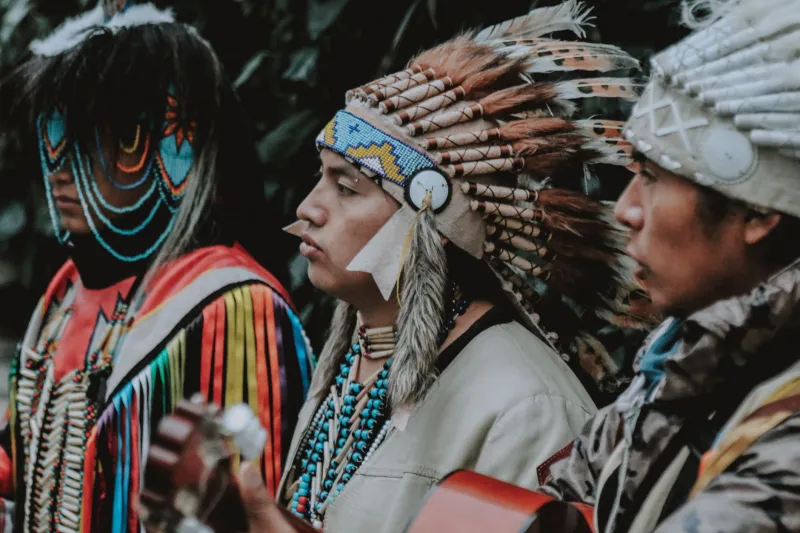
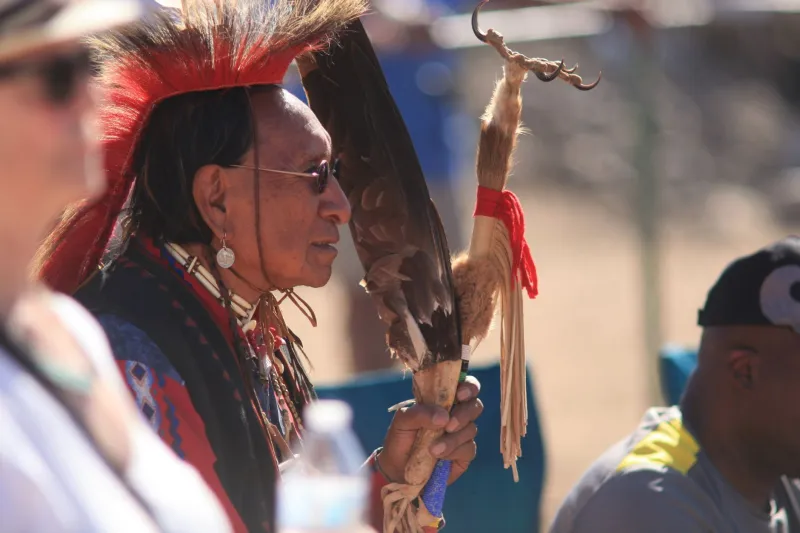
On a Tuesday evening in Minneapolis, a group of roughly fourteen people gather in a low-lit community room at the Minneapolis American Indian Center. There are no intake forms on the tables. No clinical fluorescence humming overhead. What there is, instead, is a fire keeper tending a small ceremonial flame, a circle of chairs, and an elder named Doris Bellecourt who has been telling stories since before most of the participants were born.
"The story doesn't begin when I open my mouth," she says, settling into her chair. "It begins when you decide you are ready to listen."
This is a healing circle—one of dozens now operating in cities from Seattle to Chicago to Phoenix—where Indigenous oral storytelling traditions are being deliberately, carefully revived as tools for collective trauma recovery. What might appear to outside observers as a cultural gathering is, in practice, a sophisticated therapeutic framework rooted in thousands of years of ancestral knowledge.
The Geography of Displacement and Grief
The United States is home to more than 70 percent of its Indigenous population living off-reservation, concentrated primarily in urban centers where federal services are sparse, cultural continuity is fragmented, and the compounding weight of intergenerational trauma is rarely addressed by mainstream mental health systems. According to the Urban Indian Health Institute, American Indian and Alaska Native people in urban areas experience disproportionately high rates of PTSD, depression, substance use disorders, and suicide—conditions deeply entangled with histories of forced relocation, family separation, and cultural erasure.
Conventional therapeutic models, however well-intentioned, frequently fail this population. The reasons are structural as much as cultural: distrust of institutions that have historically caused harm, financial barriers, geographic inaccessibility, and the profound inadequacy of treatment modalities that were never designed with Indigenous epistemologies in mind.
Healing circles powered by oral storytelling traditions are emerging, in part, as a direct response to these failures.
What the Circle Knows That the Clinic Does Not
Dr. Ramona Beldo, a licensed clinical social worker and enrolled member of the Turtle Mountain Band of Chippewa Indians who practices in the Chicago area, has spent more than a decade integrating traditional storytelling practices into her work with trauma survivors. She is careful to draw a distinction between cultural performance and therapeutic ceremony.
"When we sit in a circle and stories are shared, we are not simply entertaining one another," she explains. "We are engaging in a process of relational witnessing. The listener becomes accountable to the teller. The community becomes accountable to the individual. That accountability is itself a form of healing that talk therapy, in a one-on-one clinical setting, simply cannot replicate."
Trauma-informed care, as a contemporary framework, emphasizes safety, trustworthiness, peer support, collaboration, empowerment, and cultural sensitivity. Practitioners working at the intersection of Indigenous tradition and mental health argue that oral storytelling circles embody all of these principles—not by design, but by inheritance.
The stories themselves carry specific functions. Trickster narratives, for instance, offer communities permission to examine failure and shame without judgment. Origin stories reestablish a sense of belonging and continuity for individuals who have experienced profound disconnection. Testimonial storytelling—sharing one's own experience within a witnessed, ceremonially held space—mirrors the structure of trauma processing while embedding it within a communal, rather than individualized, context.
Programs Doing the Work
In Seattle, the Chief Seattle Club—a nonprofit serving homeless and low-income urban Indigenous people—has woven storytelling circles into its wraparound services model since 2019. Cultural programming coordinator Josie Swiftwind describes the program as "the connective tissue" between housing support, addiction recovery services, and mental health referrals.
"People come to us in crisis," she says. "But the first thing we do is not triage them. We sit with them. We offer them a story. Because before someone can accept help, they need to feel like they exist—like their history exists. Storytelling does that."
In Phoenix, the Native Health organization operates a program called Voices From the Earth, which pairs trained storytellers with clinical mental health staff to co-facilitate healing sessions for Indigenous youth who have experienced abuse, neglect, or housing instability. The program has reported measurable improvements in participant engagement and treatment retention, outcomes that eluded more conventional approaches.
The American Indian Community House in New York City has similarly expanded its cultural programming to include intergenerational storytelling workshops, explicitly framed around healing from historical trauma. Participants range from elders sharing memories of boarding school experiences to teenagers processing what it means to be Indigenous in a city that rarely acknowledges their existence.
Navigating the Space Between Worlds
Not everyone in the Indigenous mental health community views the blending of traditional practice and clinical frameworks without reservation. Some cultural practitioners and spiritual leaders express concern that the medicalization of sacred traditions risks stripping them of their integrity—that when a healing circle is evaluated through the lens of clinical outcomes, something essential is lost.
These are not dismissible concerns. The history of Indigenous cultural practices being appropriated, misrepresented, or instrumentalized by non-Native institutions is long and painful. Advocates working in this space are deliberate about ensuring that programs remain Indigenous-led, that ceremonial protocols are respected, and that the communities being served retain ownership over how their traditions are practiced and described.
"We are not offering Indigenous storytelling as a supplement to Western therapy," says Dr. Beldo firmly. "We are saying that our traditions constitute a complete and sophisticated system of care. The conversation should be about how Western psychology can learn from us—not the other way around."
The Listening as the Medicine
Back in Minneapolis, the circle has been running for nearly two hours. An older man named Gerald has just finished speaking—haltingly at first, then with increasing steadiness—about his father's time at a federal boarding school and the silence that followed that man home for the rest of his life. When he finishes, no one immediately responds. The silence is held, collectively, with a quality of attention that feels almost tangible.
Doris Bellecourt nods slowly. "Your father's story lived in him," she says at last. "Now it lives in all of us. It doesn't disappear. It becomes part of what we carry together."
For the organizations and practitioners working to expand these programs—and for the policymakers and funders who must ultimately decide whether to invest in culturally grounded healing—that image of shared carrying may be the most instructive framework available. Trauma does not resolve in isolation. It resolves in community, in witness, in the ancient, durable act of one human being offering their voice and another choosing, with full presence, to receive it.
The circle, it turns out, was always the answer. It simply took this long for the rest of the world to find its way to a chair.