Soil, Seeds, and Sovereignty: How Community Gardens Are Cultivating Environmental Justice Advocates
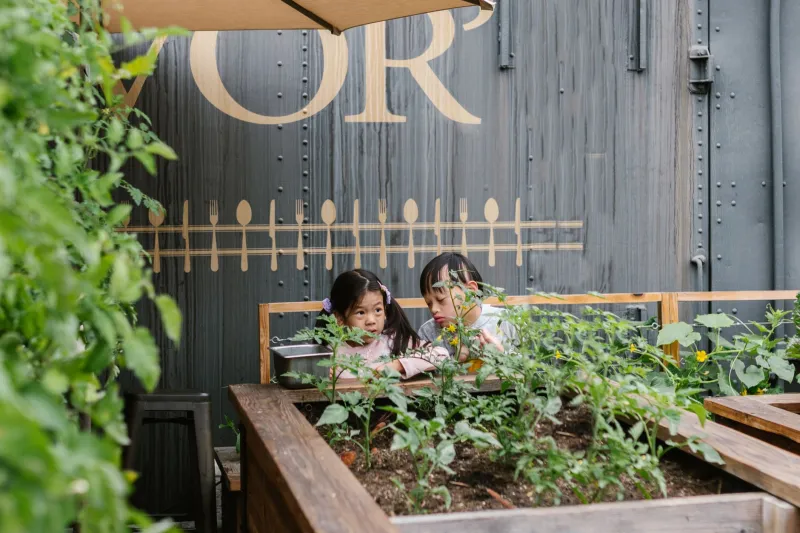
In a corner of Detroit's North End neighborhood, a stretch of land that once held crumbling asphalt now yields rows of collard greens, amaranth, and Black-eyed peas. The young people tending these rows—many of them the grandchildren of families who migrated north from the American South during the Great Migration—are not merely learning to grow food. They are recovering a relationship with the earth that systemic displacement very nearly severed entirely.
This garden, operated by a local cultural nonprofit, is one of hundreds of community growing spaces across the country that have quietly evolved into some of the most rigorous and meaningful educational environments available to young Americans. At a moment when environmental crises demand both scientific literacy and moral clarity, these gardens are producing both in abundance.
Beyond Beautification: Gardens as Political Classrooms
For decades, community garden initiatives were often framed in the language of urban beautification or supplemental nutrition. That framing, while not without merit, obscured something more profound happening in the soil. Increasingly, cultural organizations rooted in BIPOC and immigrant communities are explicitly centering environmental justice within their garden curricula—teaching young people not only how plants grow, but why certain communities have been denied access to clean land, safe food systems, and the political power to protect either.
In South Los Angeles, the nonprofit Alma Backyard Farms operates garden education programs that draw heavily from the agricultural traditions of the Central American families who make up much of the surrounding community. Participants learn to cultivate chayote, epazote, and varieties of corn that their grandparents grew in Guatemala and El Salvador. Program coordinators describe the dual purpose deliberately: students gain hands-on skills in sustainable agriculture while simultaneously engaging in structured conversations about pesticide exposure in farmworker communities, water rights in drought-stricken regions, and the historical dispossession of Indigenous land.
"We don't separate the plant science from the political history," one program director explained during a recent symposium on food sovereignty. "If a child understands why a particular seed variety was nearly lost, they understand something essential about power and who gets to decide what survives."
Ancestral Knowledge as Curriculum
One of the most compelling aspects of culturally grounded garden programs is their insistence that traditional agricultural knowledge constitutes legitimate and sophisticated expertise—one that Western academic institutions have too long dismissed or appropriated without credit.
In the Rio Grande Valley of Texas, where communities straddle the border between the United States and Mexico, several nonprofit organizations have partnered with local elders to document and transmit Indigenous Nahua and Rarámuri growing practices. Milpa farming—the companion planting of corn, beans, and squash that sustained civilizations across Mesoamerica for thousands of years—is taught not as a historical curiosity but as a living, adaptive system with direct relevance to contemporary climate challenges.
Students in these programs learn to read weather patterns, manage soil fertility without synthetic inputs, and conserve water using techniques refined over generations. The environmental science embedded in these methods is sophisticated. More importantly, the young people learning it understand that their communities have always possessed knowledge worth preserving—a recognition that carries profound implications for how they perceive themselves in relation to the dominant culture.
In Minneapolis, where a significant Hmong diaspora community has established one of the most vibrant urban farming networks in the Midwest, similar dynamics are at play. Community garden programs operated by Hmong cultural organizations teach young people to cultivate bitter melon, lemongrass, and varieties of Asian greens unavailable in most commercial markets. Elders serve as lead instructors, a structural choice that reverses the typical generational hierarchy of formal education and affirms the value of experiential, community-held knowledge.
Land Access as a Civil Rights Issue
No honest discussion of community food growing can sidestep the question of land. In virtually every major American city, the neighborhoods with the least access to fresh food are also those where communities of color have faced the most aggressive histories of redlining, urban renewal displacement, and environmental contamination. Teaching young people to grow food without teaching them this history would be, at best, incomplete.
The most effective garden education programs treat land access as a civil rights issue—because it is. Organizations such as the Detroit Black Community Food Security Network and the East New York Farms! project in Brooklyn explicitly connect their agricultural programming to campaigns for equitable land tenure, zoning reform, and community land trust models that would protect growing spaces from speculative development.
Young participants in these programs often emerge as articulate advocates. They attend city council meetings. They testify before planning commissions. They understand, with the particular clarity that comes from having worked the earth themselves, that the right to grow food in one's own community is not a minor amenity but a dimension of self-determination.
Climate Resilience From the Ground Up
As the consequences of climate change become increasingly material—intensifying heat, irregular precipitation, soil degradation—community gardens are also becoming practical laboratories for climate adaptation. Young people in these programs learn to build rain gardens that manage stormwater runoff, create compost systems that sequester carbon and rebuild depleted urban soils, and select crop varieties suited to shifting growing conditions.
In New Orleans, where the legacy of Hurricane Katrina and the ongoing threat of flooding make climate resilience a matter of survival rather than abstraction, garden programs operated by Vietnamese American and Black community organizations teach young people to think about food production as infrastructure—as essential to community safety as levees or emergency services.
These programs also address the disproportionate burden that climate change places on low-income communities and communities of color. When a young person in a flood-prone neighborhood learns to build a raised bed garden that can withstand seasonal inundation, they are not simply acquiring a gardening skill. They are developing an adaptive capacity that their community will need, and they are doing so with the understanding that the vulnerability of their neighborhood is not accidental but the product of decades of policy decisions made without their community's input.
Growing the Next Generation of Stewards
The garden, at its best, teaches humility and interdependence—the understanding that human flourishing depends on the health of systems far larger than any individual. Cultural organizations that have made the garden a cornerstone of their educational programming understand this implicitly. They are cultivating not only food but a generation of young people who know, viscerally and intellectually, that the health of the earth and the health of their communities are bound together.
For organizations committed to equity and cultural vitality, the garden represents something rare: an educational space that is simultaneously ancient and urgently contemporary, deeply personal and explicitly political. The seeds being planted in Detroit, Los Angeles, Minneapolis, and New Orleans are not only botanical. They are the seeds of an environmental justice movement grounded in the particular knowledge, grief, and determination of communities that have the most to lose—and, increasingly, the most to teach.