Thread by Thread: How LGBTQ+ Elders Are Weaving Community, Memory, and Belonging Through Fiber Arts
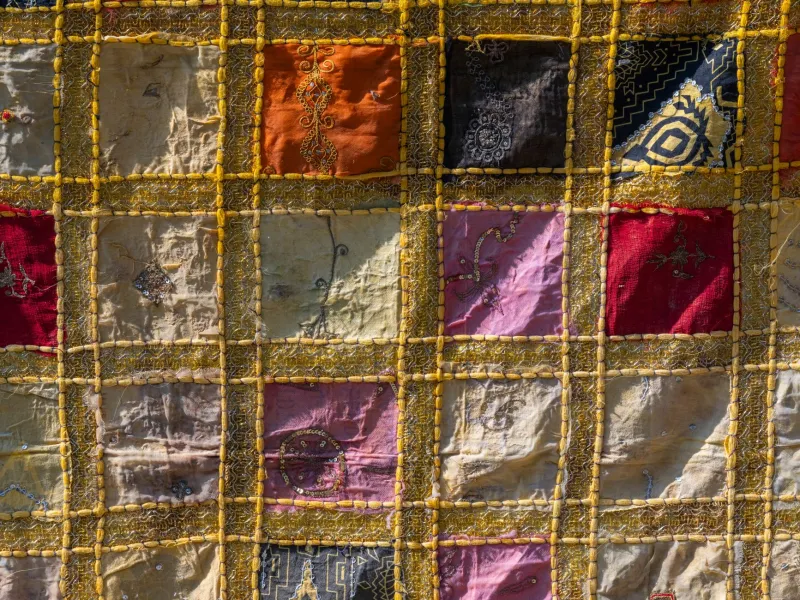
On a Tuesday afternoon in a rented room above a community center in Portland, Oregon, eight people ranging in age from sixty-two to eighty-one sit in a loose circle. Needles click softly. A half-finished quilt panel rests across someone's lap. Laughter moves through the room like warmth. To an outside observer, it might resemble any other crafting group. But for the participants gathered here under the banner of the Lavender Stitch Collective, what is happening is something considerably more deliberate — and considerably more necessary.
This is a safe space built from yarn and intention, a place where LGBTQ+ elders can show up without apology, without concealment, and without the exhausting performance of self-erasure that so many of them spent decades perfecting simply to survive.
The Weight of Isolation
The statistics surrounding LGBTQ+ older adults in America are sobering. According to research from SAGE (Services and Advocacy for GLBT Elders), one of the nation's leading organizations supporting this population, LGBTQ+ seniors are twice as likely as their heterosexual and cisgender peers to live alone, and four times less likely to have children who might serve as caregivers or social anchors. Many came of age during eras of criminalization, institutionalization, and social hostility so severe that chosen family was not a lifestyle preference but a survival strategy — and those networks have, for many, eroded over time through loss, illness, and geographic displacement.
The COVID-19 pandemic deepened these fractures considerably. Community gathering spaces closed. Pride events were cancelled. The informal ecosystems of connection that had sustained many LGBTQ+ elders — the bar, the community center, the shared meal — evaporated almost overnight. What remained, for many, was silence.
It is against this backdrop that fiber arts circles oriented specifically toward LGBTQ+ older adults have emerged with renewed urgency across American cities and towns.
Why Fiber Arts, Specifically?
The choice of medium is not incidental. Knitting, quilting, weaving, and embroidery carry a particular cultural and historical resonance that organizers describe as both intentional and instinctive.
"There is something about working with your hands that lowers the defenses," says Miriam Okafor, a seventy-year-old retired social worker who co-founded a queer elder craft circle in Chicago's Andersonville neighborhood in 2021. "When your hands are occupied, your mouth opens differently. Stories come out that might not come out if you were just sitting across from someone at a table."
This observation aligns with a growing body of research on the therapeutic dimensions of craft. Occupational therapists and mental health practitioners have long noted that repetitive, tactile activity engages the nervous system in ways that reduce cortisol levels and create psychological conditions conducive to disclosure and connection. For populations that have been historically conditioned to guard their inner lives carefully, the meditative rhythm of needlework can function as a kind of permission.
Beyond the neurological, there is the deeply political dimension of reclaiming fiber arts as a queer tradition. The AIDS Memorial Quilt — one of the most significant public art projects in American history — is perhaps the most visible example of how textile-making has served as an instrument of queer grief, memory, and witness. Many participants in contemporary LGBTQ+ elder craft circles cite the Quilt as a formative reference point, a reminder that stitching can be an act of testimony as much as decoration.
Preserving Queer History Through the Hands
Several of these circles have evolved beyond social gathering into active archival projects. In Minneapolis, a group called Threads of the Movement has spent the past three years producing an ongoing series of embroidered panels documenting local LGBTQ+ history — the bars that served as sanctuaries before Stonewall, the activists who organized under threat of arrest, the community members lost to the AIDS crisis whose names might otherwise be forgotten entirely.
"We are the last generation with living memory of certain things," says Dale Whitmore, seventy-seven, one of the project's founding members. "If we don't stitch it, if we don't write it down in some form, it disappears with us. The younger generations deserve to know what it cost."
This sense of historical custodianship lends these circles a gravity that participants describe as profoundly meaningful. The act of making becomes an act of transmission — a passing of knowledge, testimony, and cultural inheritance from one generation to the next. Several groups have begun hosting intergenerational sessions, inviting younger LGBTQ+ community members to sit alongside elders and learn both the craft and the history embedded within it.
The Architecture of Belonging
What distinguishes LGBTQ+-specific fiber arts circles from general craft groups is not merely the demographic composition but the intentionality of the social architecture. Organizers speak with precision about the conditions necessary to create genuine safety for this population.
"Many of our members spent fifty or sixty years hiding," explains Rosa Delgado, who facilitates a quilting circle for LGBTQ+ seniors at a community center in San Antonio. "They may be out now, but the muscle memory of concealment doesn't disappear overnight. We have to build trust actively, not assume it."
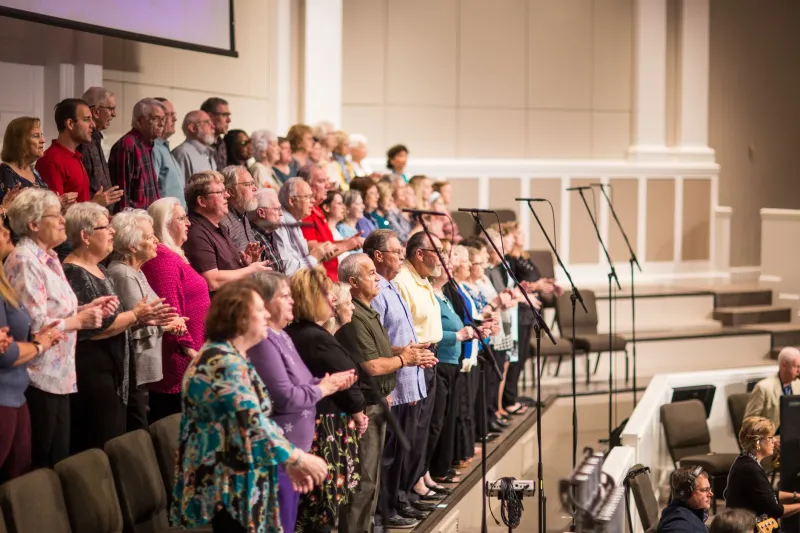
That building happens through consistent practices: the use of preferred names and pronouns without exception, explicit agreements about confidentiality, facilitators who are themselves LGBTQ+ and trained in trauma-informed approaches, and a deliberate culture of noncompetitive making in which skill level is irrelevant and presence is the only requirement.
Participants describe the cumulative effect of these conditions as transformative. "I have never in my life been in a room where I didn't have to explain myself or defend myself or make myself smaller," says Gerald Hutchins, sixty-eight, a member of a knitting circle in Philadelphia. "I walk in here and I am just — allowed. That is not a small thing. After a lifetime of not being allowed, it is actually enormous."
A Model Worth Expanding
Despite their evident impact, LGBTQ+ elder fiber arts circles remain underfunded and underrecognized within the broader landscape of arts programming and senior services. Many operate on minimal budgets, relying on donated materials, volunteer facilitation, and the generosity of community spaces willing to offer their rooms at reduced cost.
Advocates argue that these circles deserve recognition not merely as social amenities but as legitimate public health interventions. The documented relationship between social isolation and adverse health outcomes in older adults — including increased risk of dementia, cardiovascular disease, and premature mortality — makes the case that community-building programs for marginalized elders carry genuine preventive value.
Organizations like SAGE have called on municipalities, arts councils, and health departments to invest in culturally specific programming for LGBTQ+ seniors, recognizing that generic senior services frequently fail to meet this population's needs or earn its trust. Fiber arts circles, with their low barrier to entry, their portability, and their proven capacity to generate deep social bonds, represent a compelling model for what that investment might look like in practice.
The Stitch as Witness
At the close of the Tuesday session in Portland, the group pauses to admire the afternoon's collective output — a few more inches of knitted fabric, another panel of a quilt that has been growing for two years and will eventually be donated to a local LGBTQ+ history archive. Someone makes tea. The conversation drifts from craft to memory to the week's news to a story about a lover from 1979 that the room receives with the reverence it deserves.
These are not merely hobbies. These are acts of resistance, of preservation, of mutual recognition. In a culture that has historically rendered LGBTQ+ elders invisible — first through persecution, later through neglect — the simple act of gathering, making, and witnessing one another carries a force that no single stitch can contain but that every stitch, collectively, begins to express.
The needle moves. The thread holds. The circle continues.